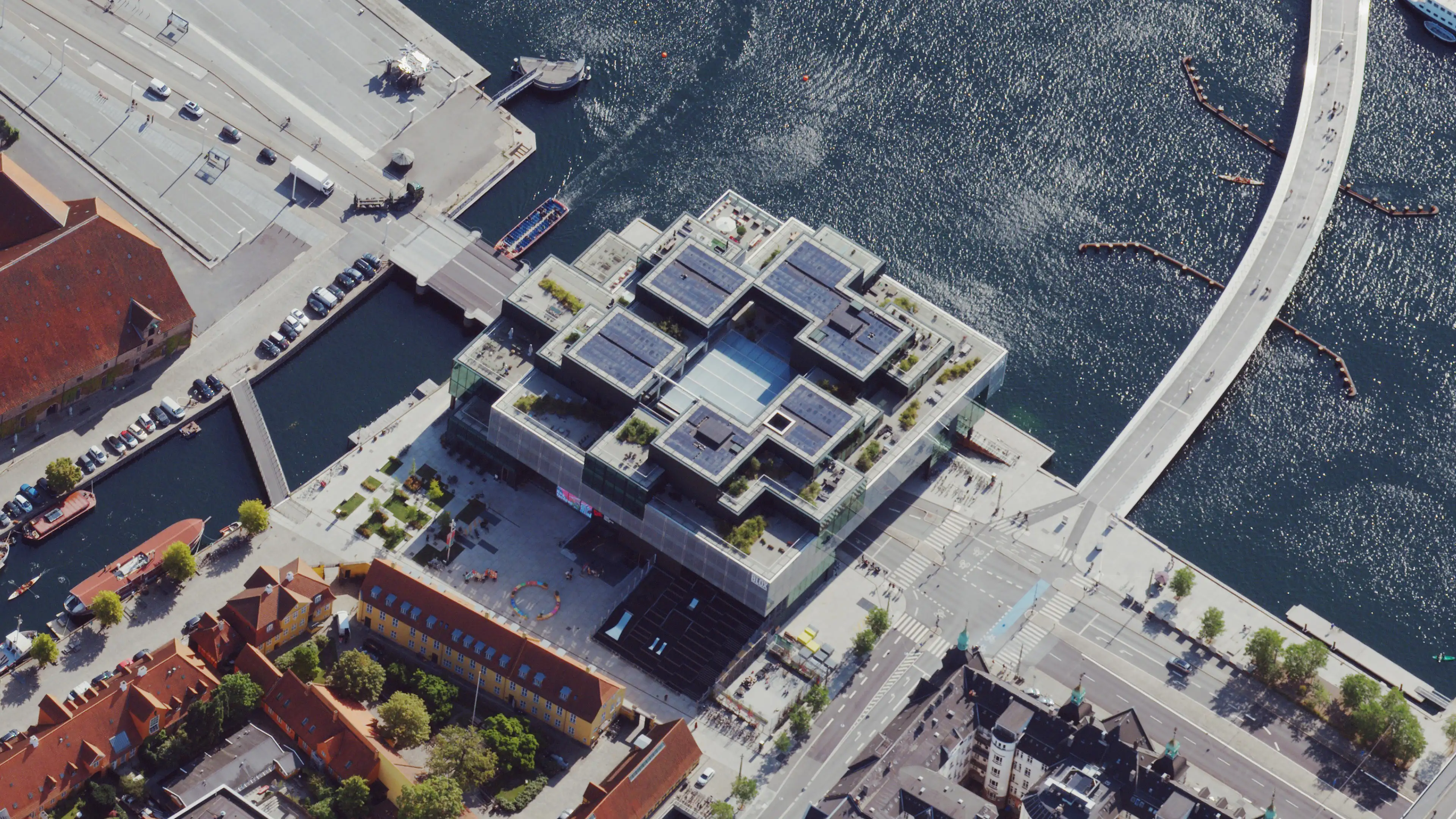
The opening of BLOX in Copenhagen in 2018 gave Danish architecture and urban solutions a prominent platform for reaching the world. That ambition prompted an uncomfortable question about the society those solutions represented. Denmark’s achievements in renewable energy, welfare and liveability coexisted with a way of life carrying a substantial carbon footprint per person.
Mind the Gap began from a deliberately uncompromising proposition: reproducing that way of life at a scale would challenge the planetary balance. The promise of Danish solutions demanded an honest assessment of the resource use, consumption and emissions underpinning the Danish model.
The construction sector offered a telling example. In 2018, research data identified only 210 of 5,005 ongoing construction projects in Denmark as sustainable, approximately 4%. The discrepancy gave urgency to a conversation about what society measured, what it celebrated and what it actually built.
The enquiry connected human wellbeing with planetary wellbeing, examined the contradictions within Denmark’s green identity and introduced the carbon commons as a way to discuss collective responsibility for the conditions that sustain life.
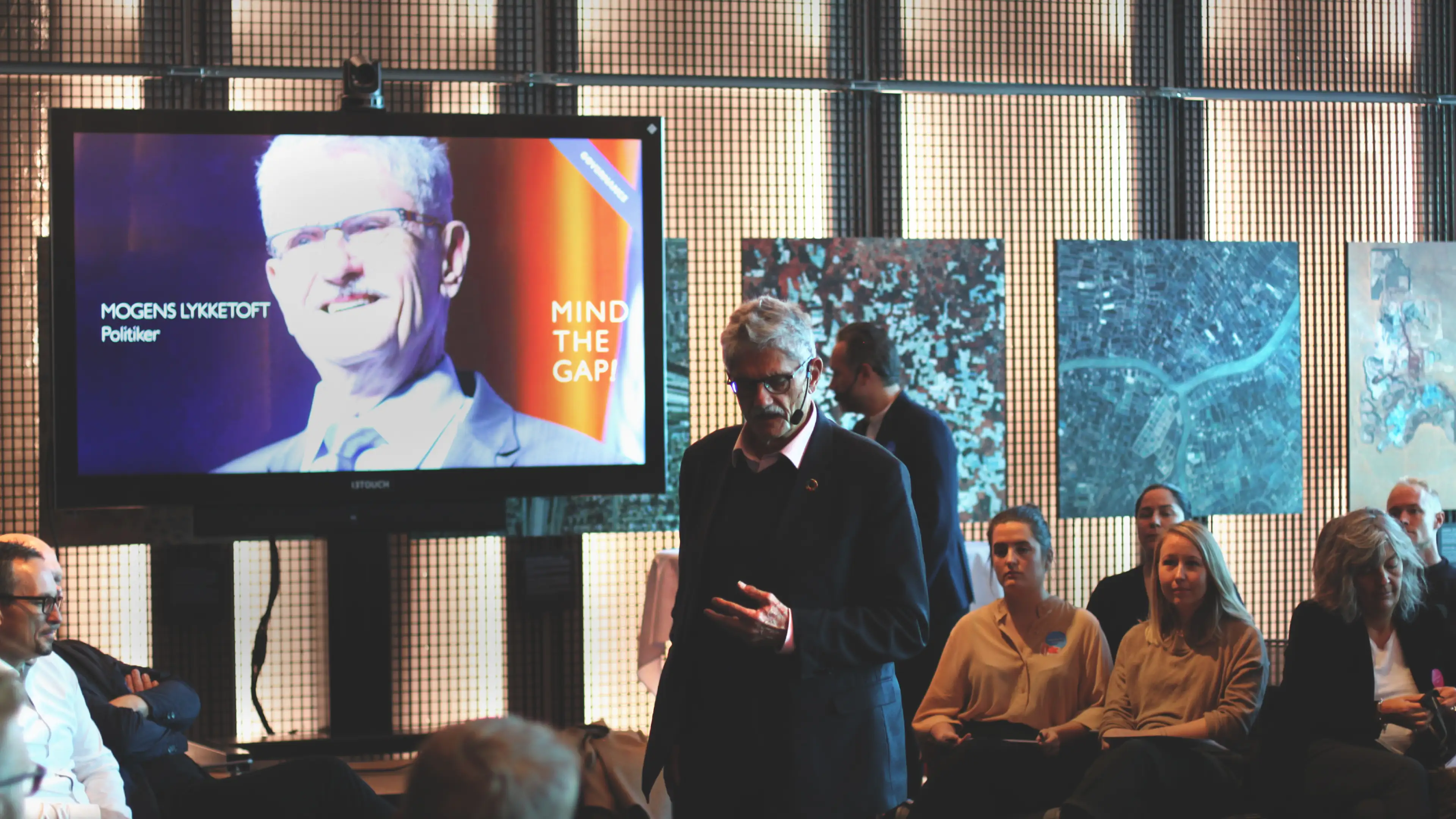
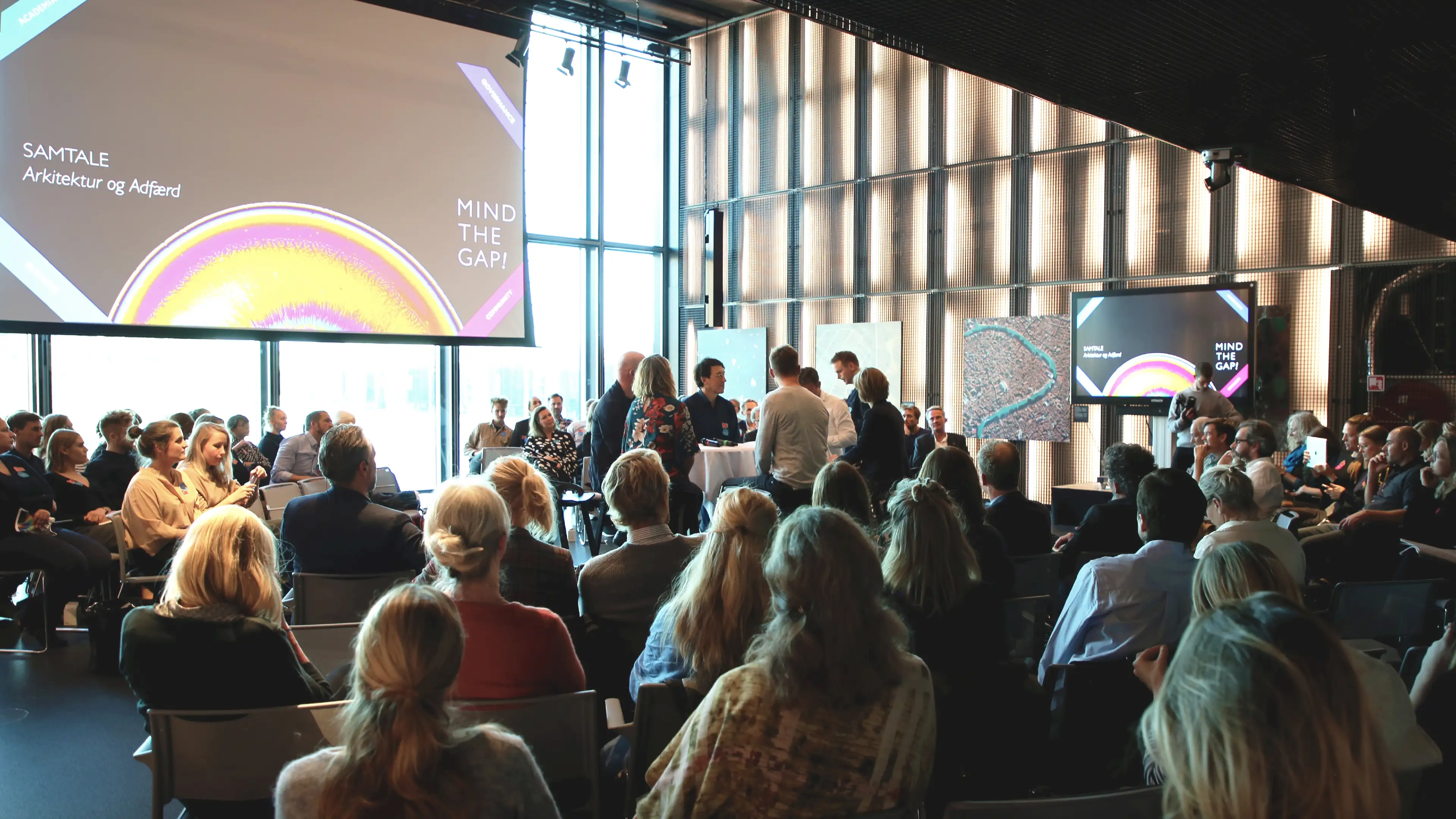
The symposium translated a quadruple helix model into the organisation of the auditorium at the Danish Architecture Center in BLOX. Academia, government, business and civil society occupied four sections, each directed towards the centre. Participants could look one another in the eye as they listened, spoke and disagreed.
This arrangement made the relationships between knowledge, political decisions, commercial interests and everyday experience visible. The central stage became a common ground on which each sector’s assumptions could be questioned by the others. The spatial design asked participants to recognise their place within a shared predicament and their different capacities to act.
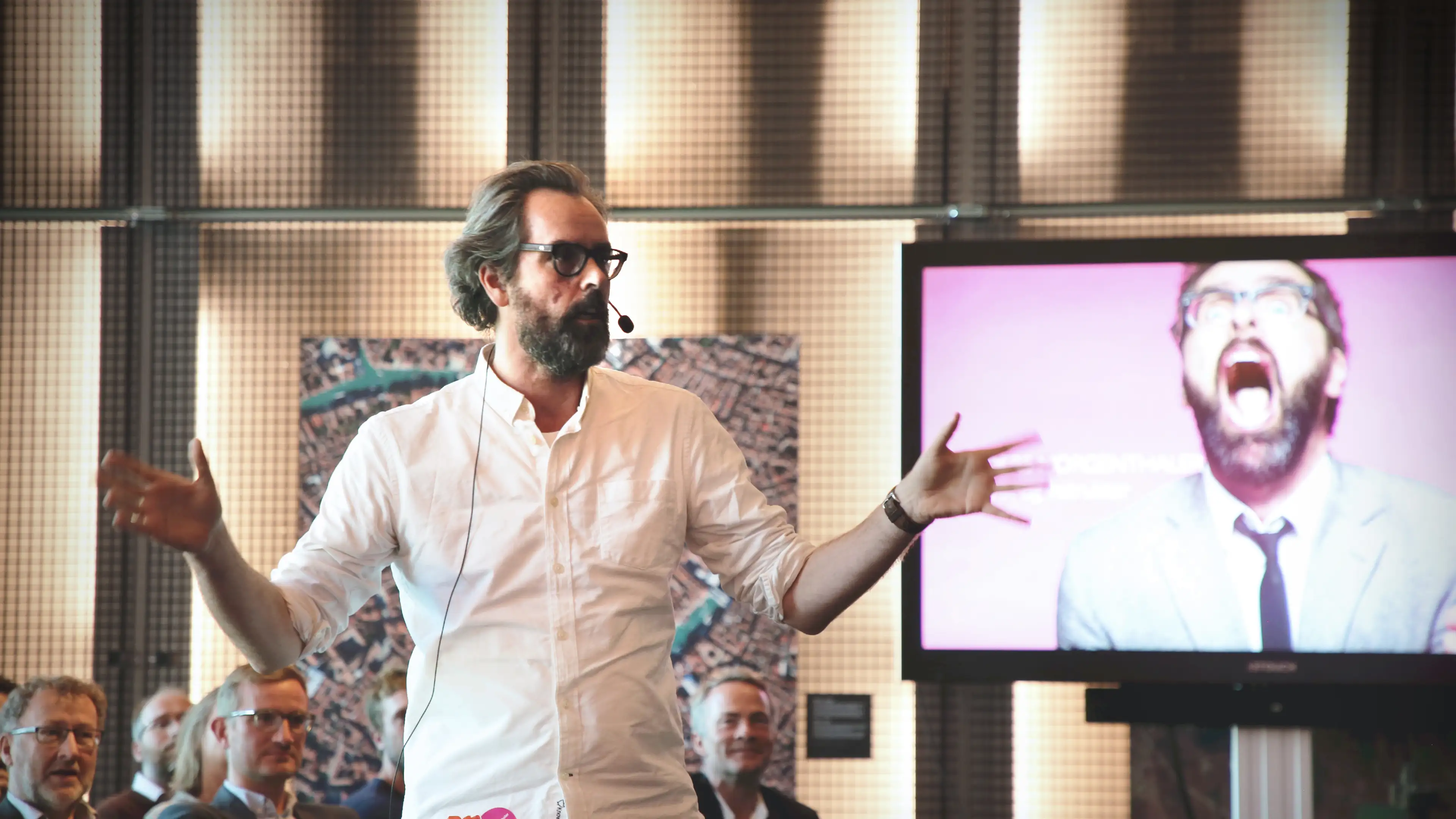
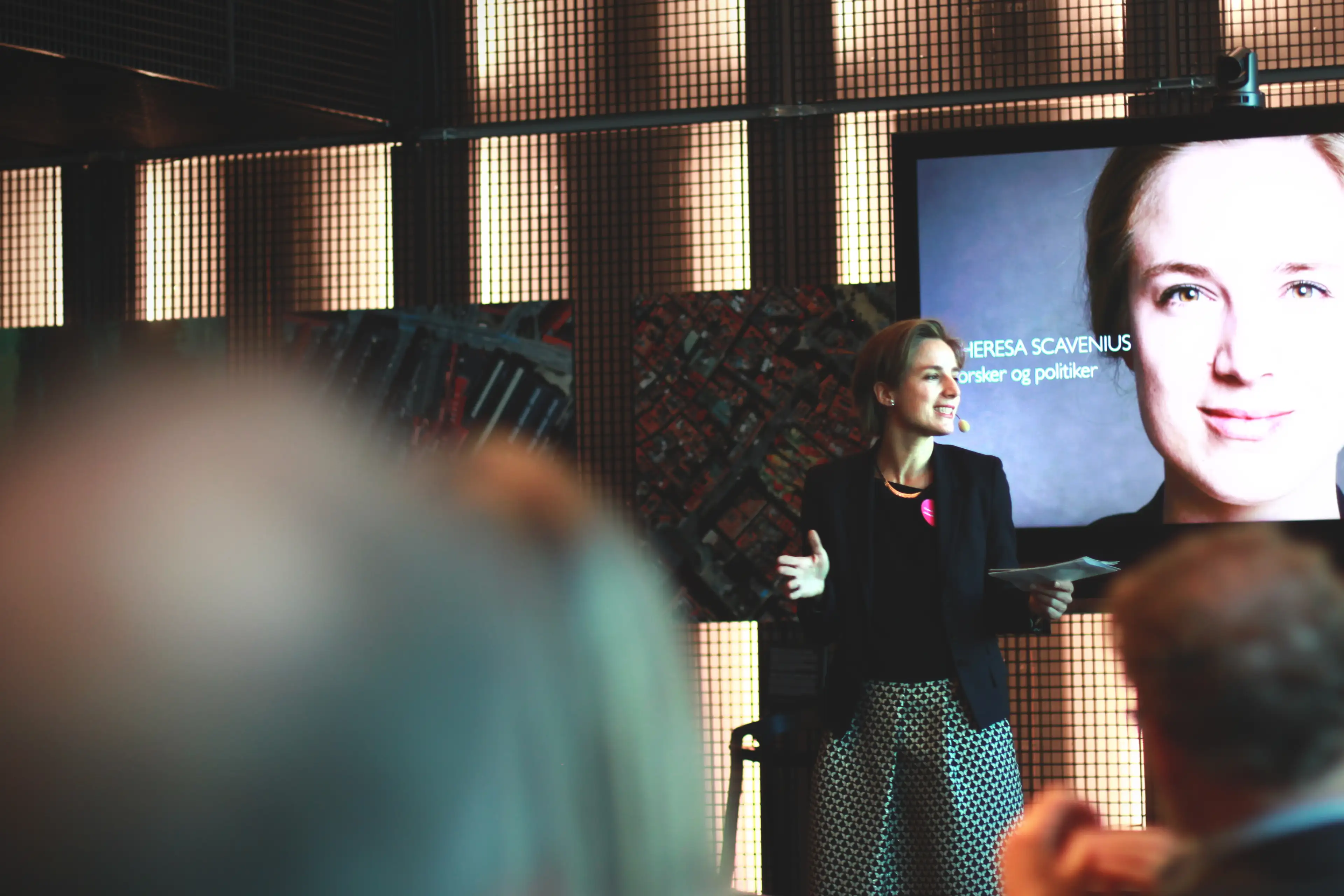
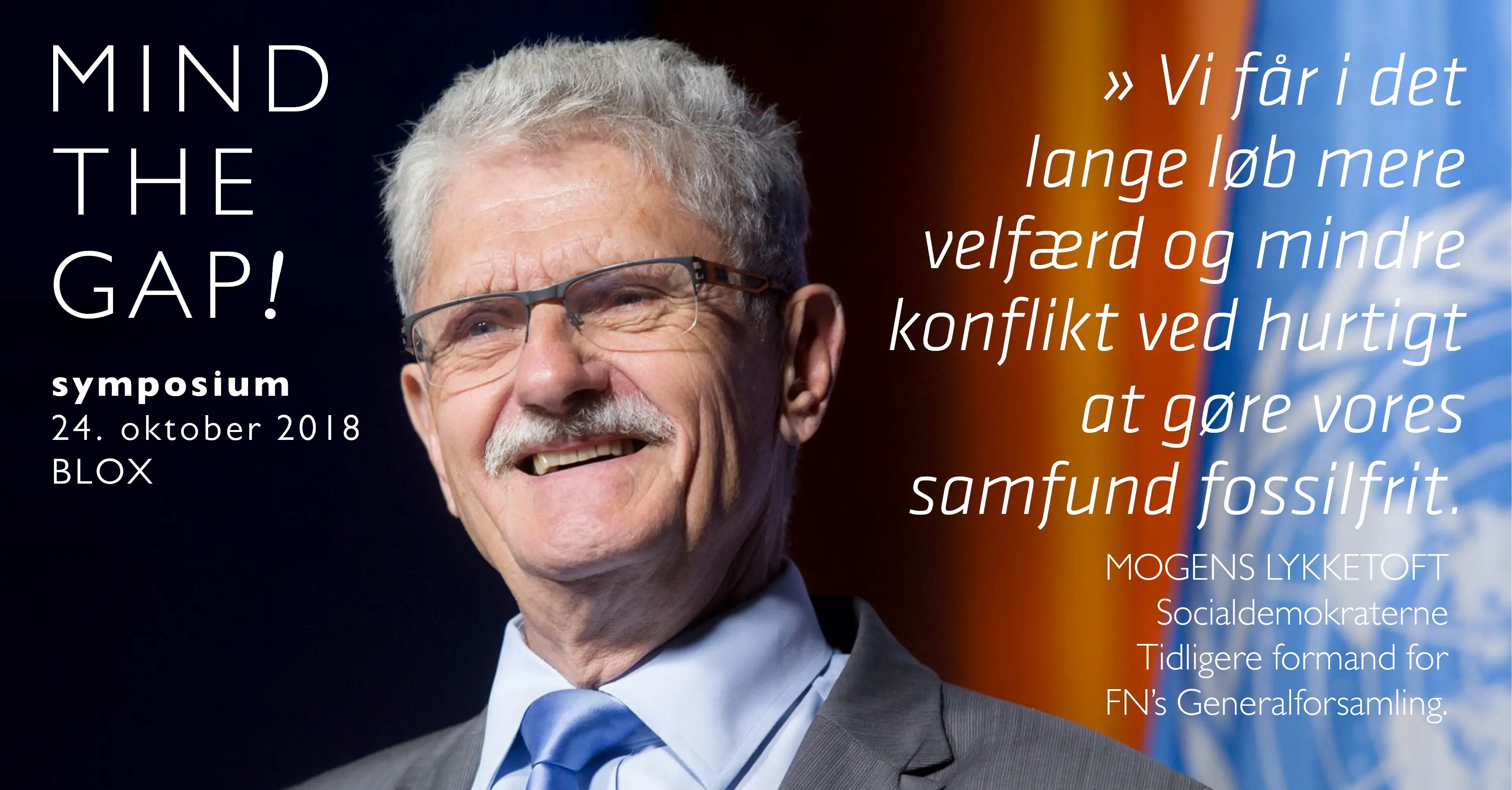
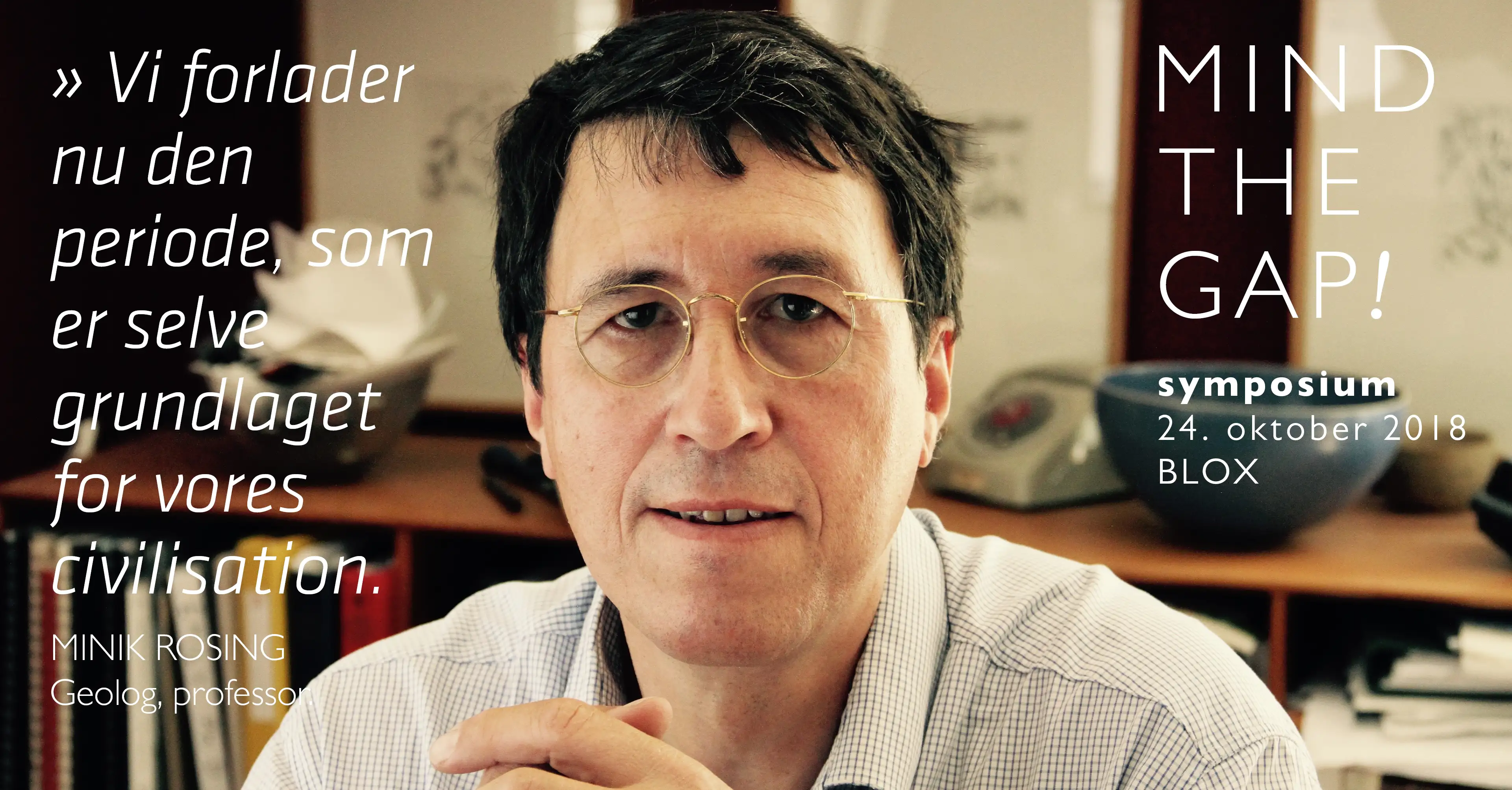
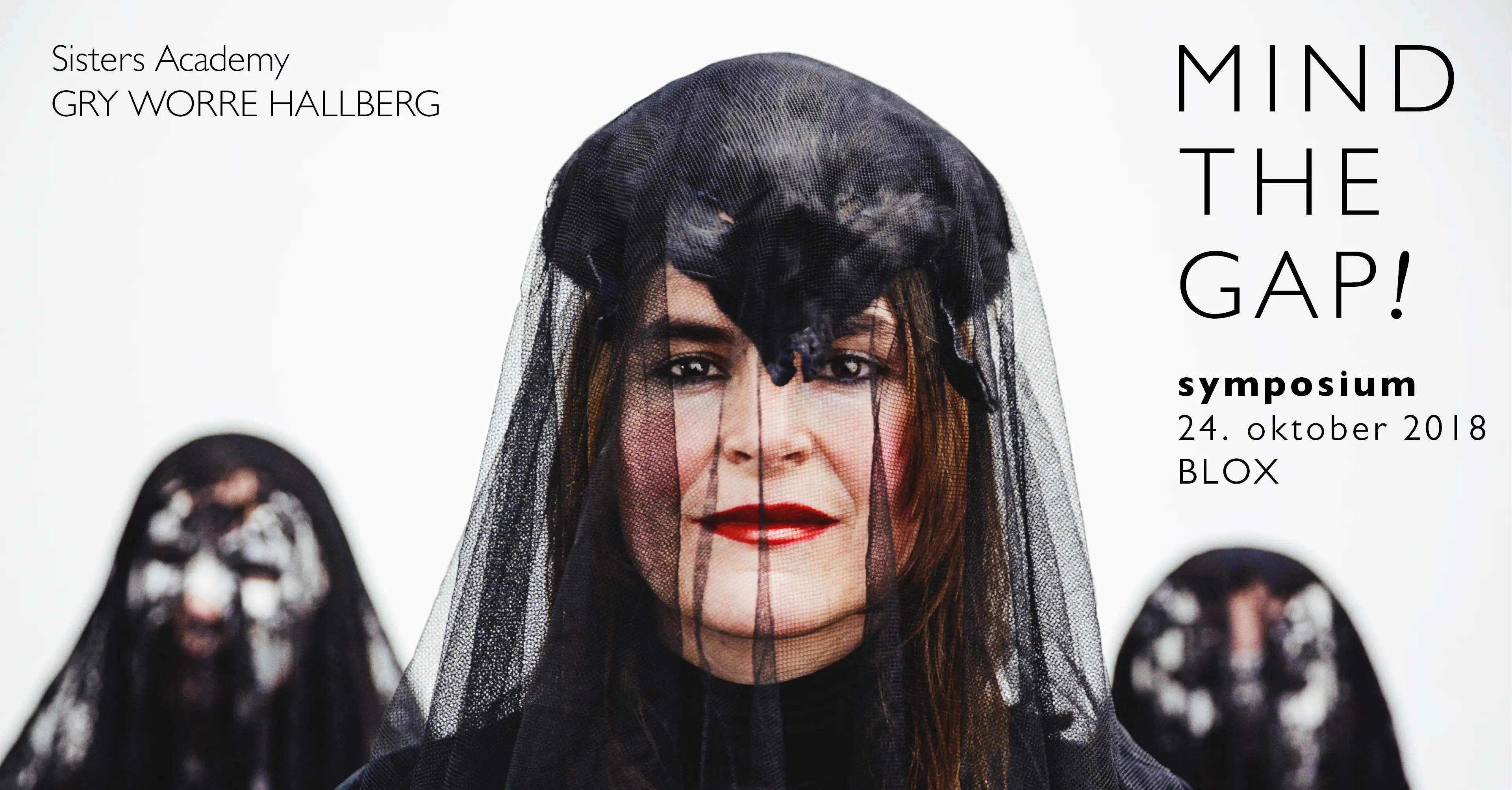
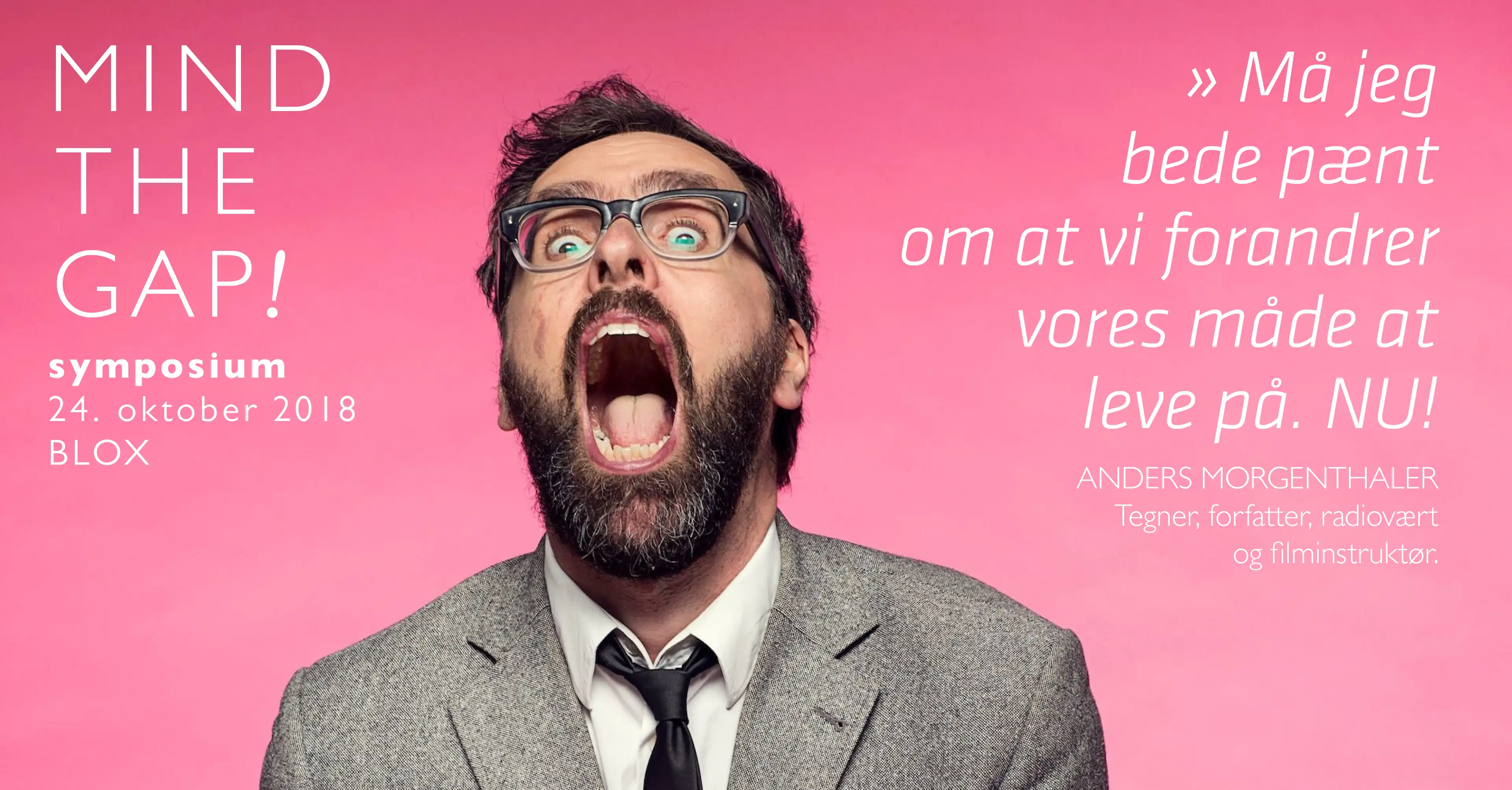
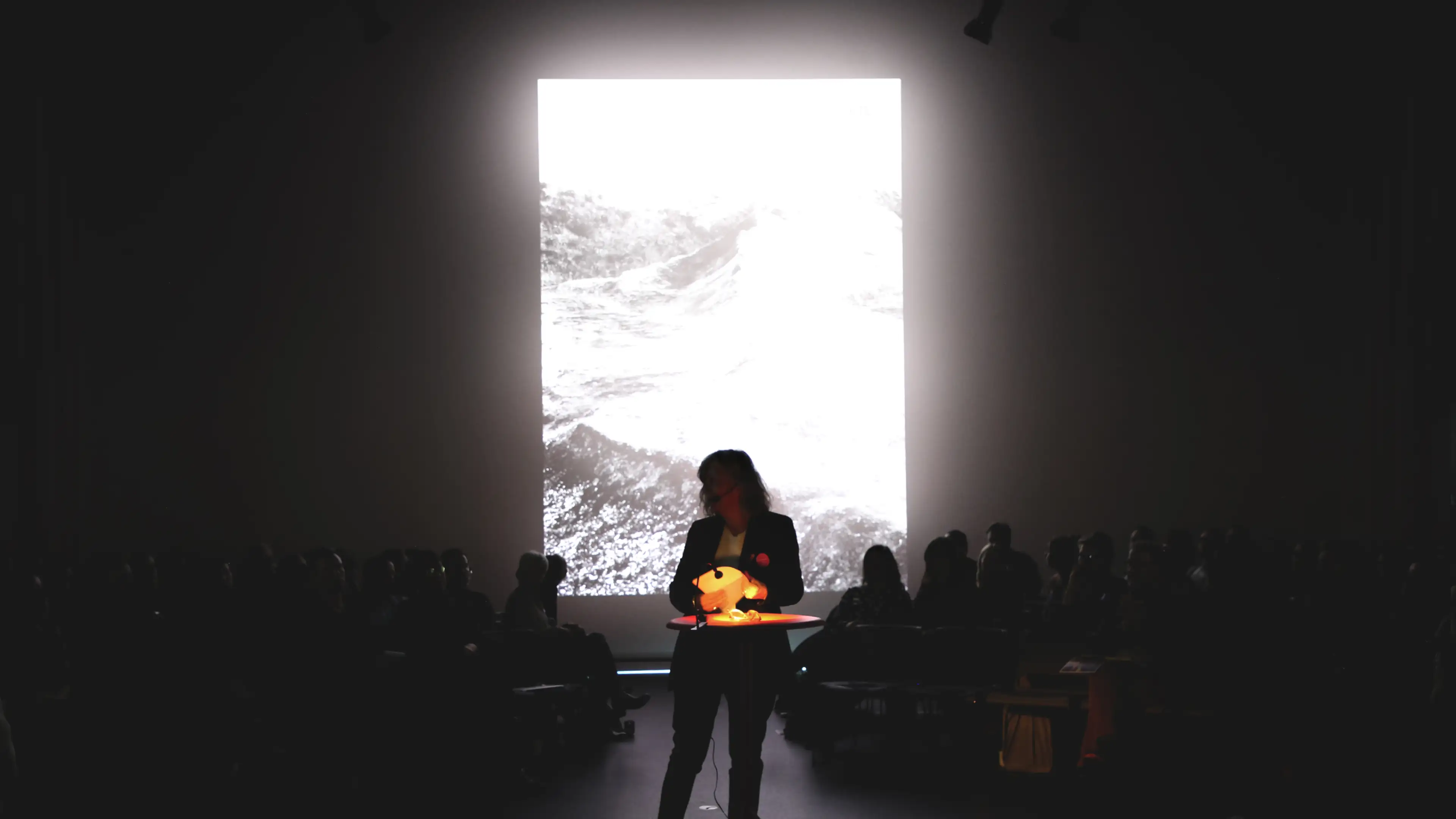
The programme connected geologist Minik Rosing’s perspective on geological time with Mogens Lykketoft’s discussion of the UN Sustainable Development Goals and Ida Auken’s examination of the Danish paradox. NCC director Martin Manthorpe addressed the building industry’s responsibilities, while climate policy and democracy researcher Theresa Scavenius and filmmaker and illustrator Anders Morgenthaler explored acting on knowledge and everyday as well as political responsibility. Gry Worre Hallberg of Sisters Academy contributed the performance Sensuous Society.
Throughout the day, participants were confronted with a succession of gaps and could interact through their phones. This gave them a way to contribute their own responses as the discussion unfolded. The programme combined scientific presentations, political debate, performance and food experiences, approaching the climate crisis through its cultural, emotional and material consequences.
The commitment to representation extended to the ticket structure. Private organisations paid higher fees, while grassroots participants paid less. Differentiated pricing acknowledged unequal financial resources and made room for voices whose contribution could not be measured by their ability to pay.
The inaugural symposium took place on 24 October 2018. A film produced by Heartbeats carried its questions and participants’ reflections to a wider audience. Subsequent regional events brought the discussion beyond Copenhagen, connecting the shared climate challenge to other local settings and communities.
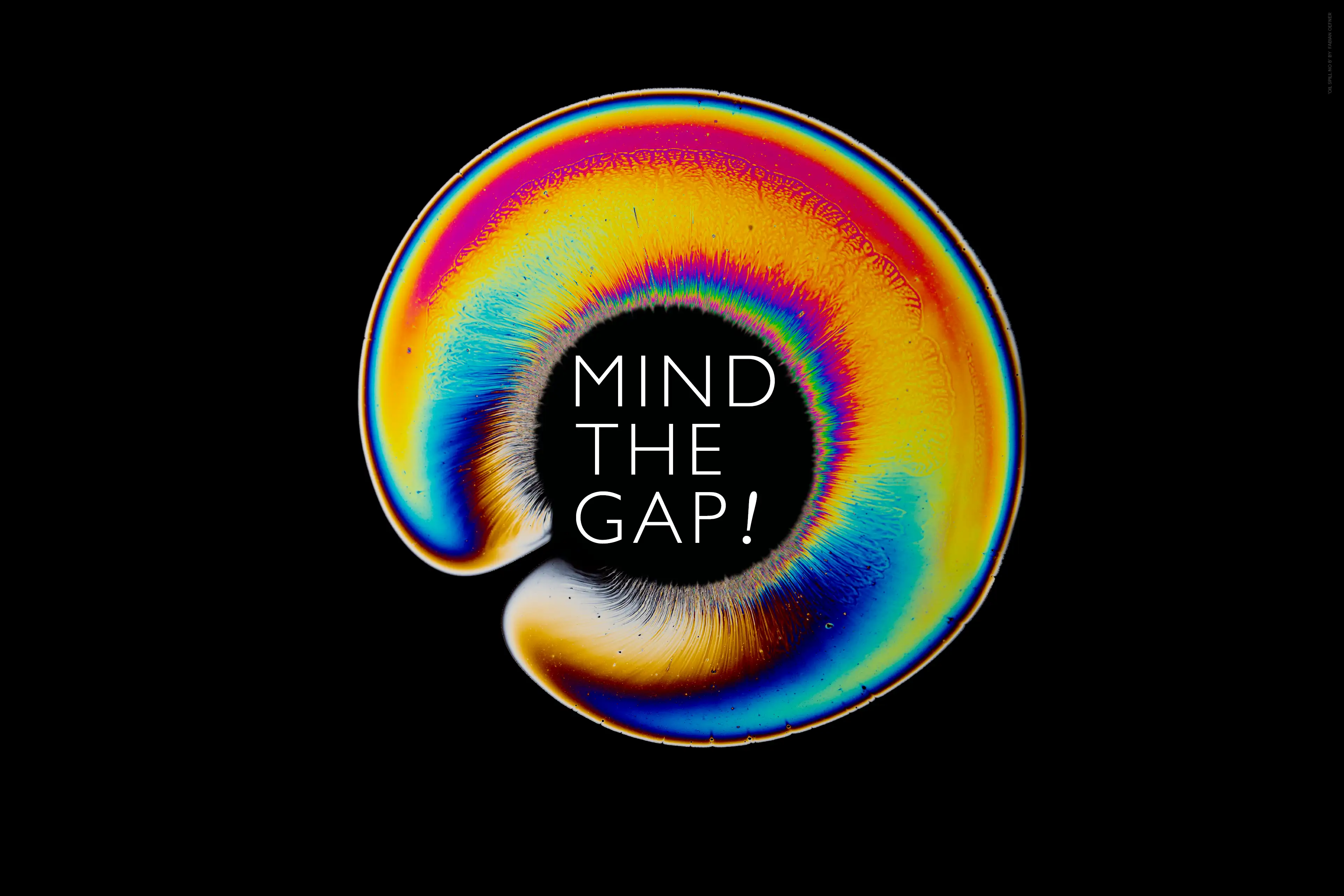
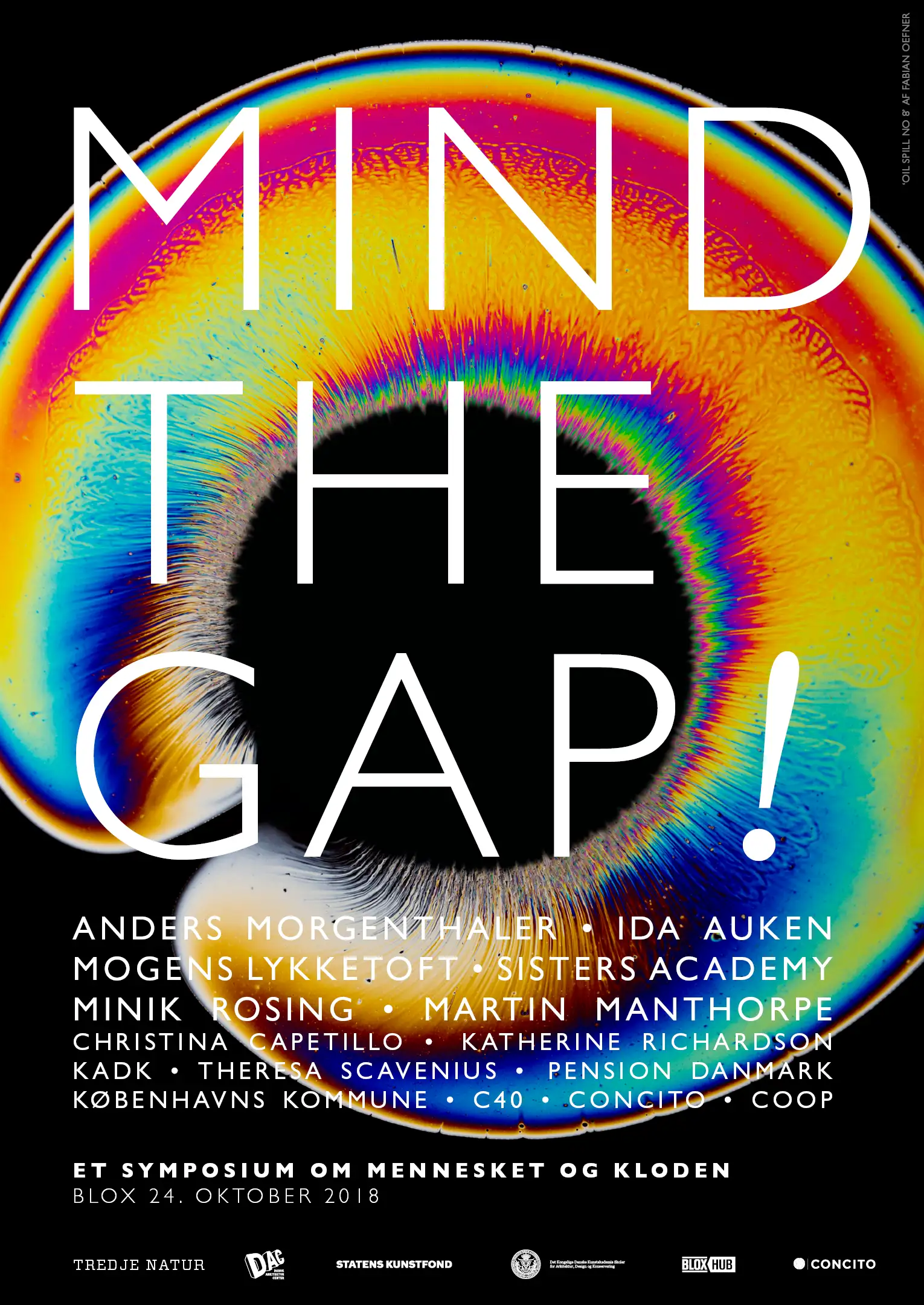
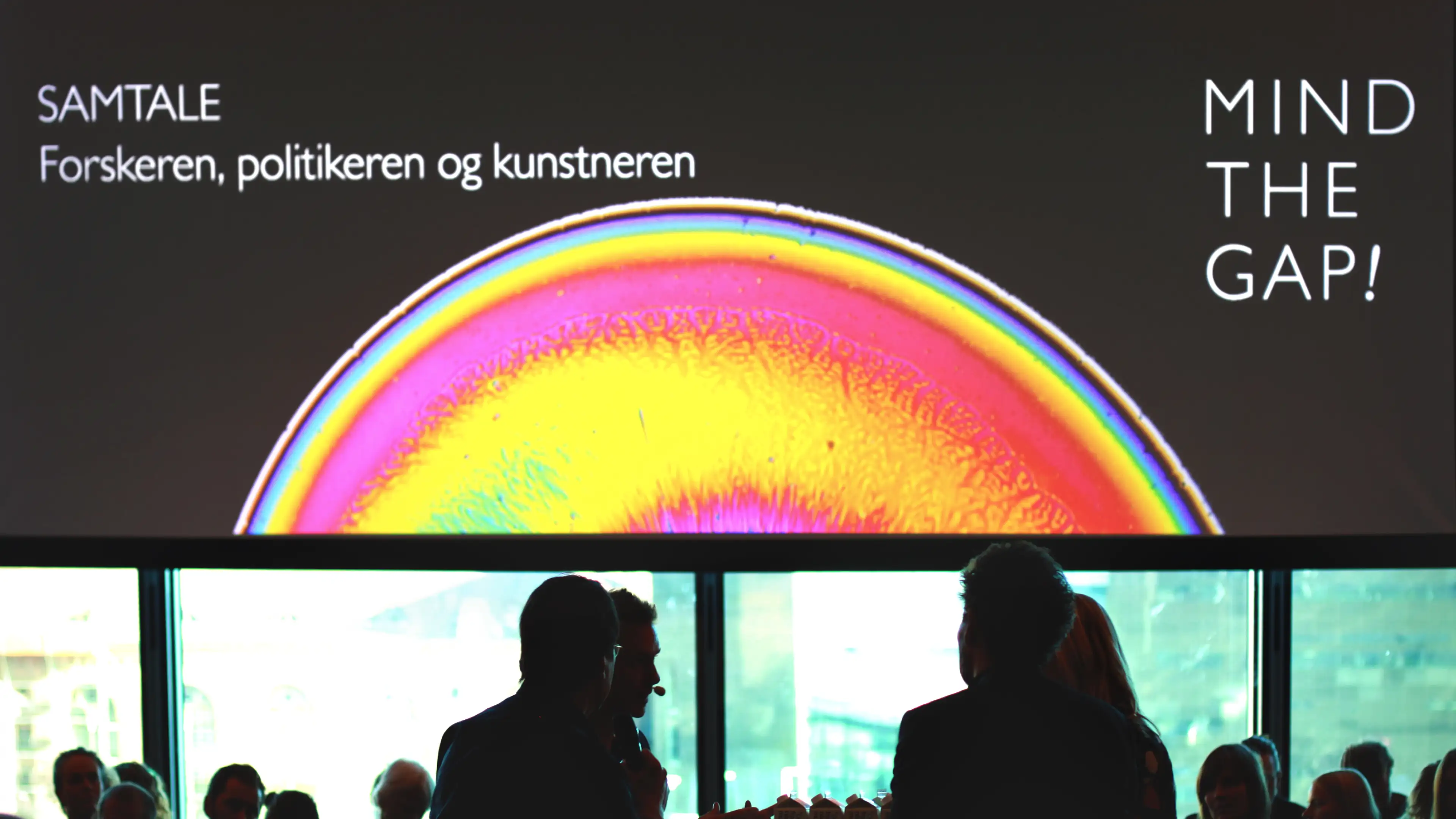
The poster featured an image from Fabian Oefner’s Oil Spill series. Its iridescent colours and unfamiliar, almost planetary form offered a disquieting beauty. An image produced through oil spreading across water became the visual point of entry to a discussion about human influence on the Earth.
Within the symposium’s framing, the image expressed the ambiguity of the Anthropocene: a world in which the things people create, desire and find beautiful are entangled with the conditions they disturb. Beauty and damage could inhabit the same image.
This ambiguity was central to the project’s invitation. Acting in a complex and conflict-filled present requires a capacity to stay with uncomfortable knowledge, reconsider familiar assumptions and accept responsibility amid uncertainty. Mind the Gap created a public setting in which these tensions could be confronted together.