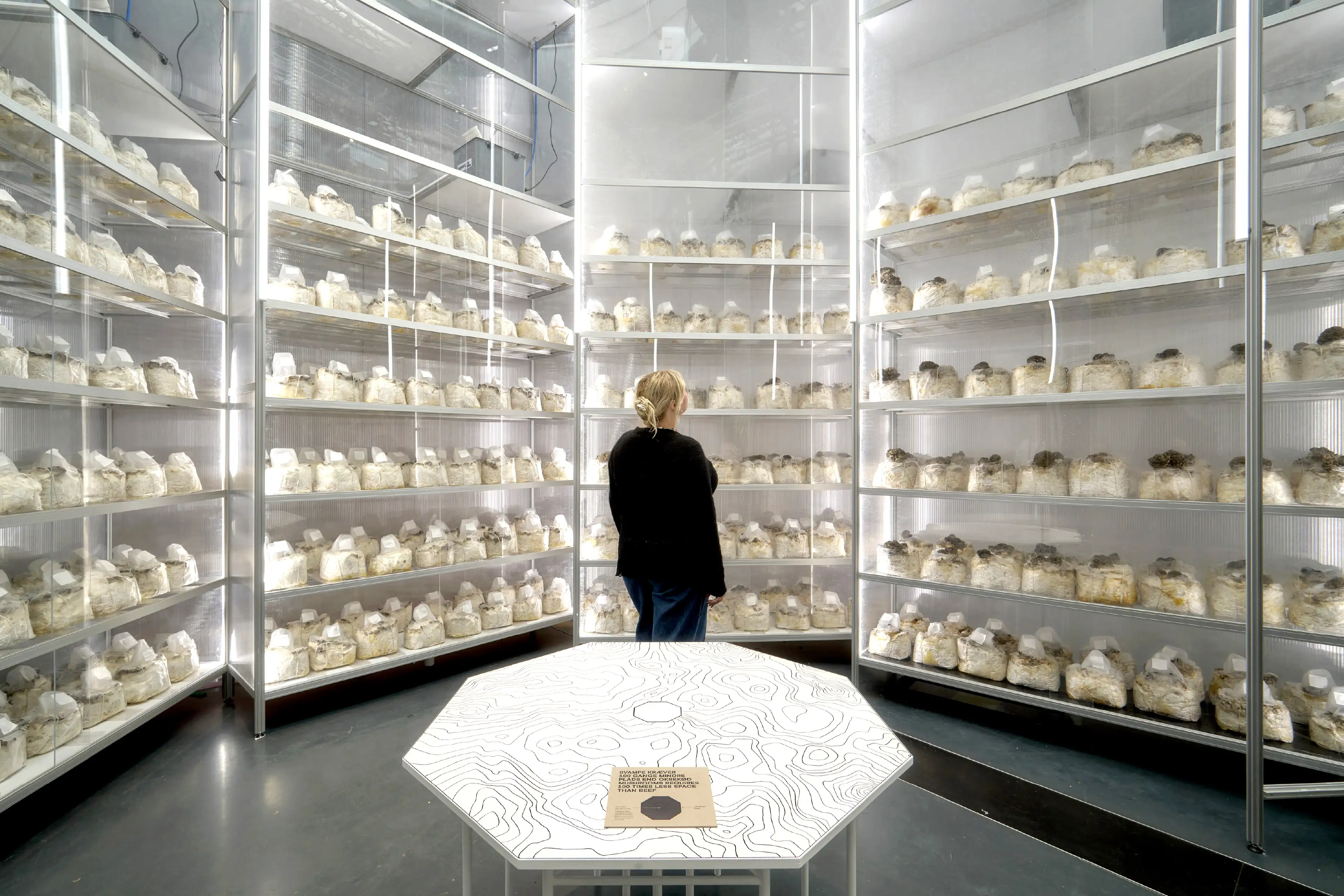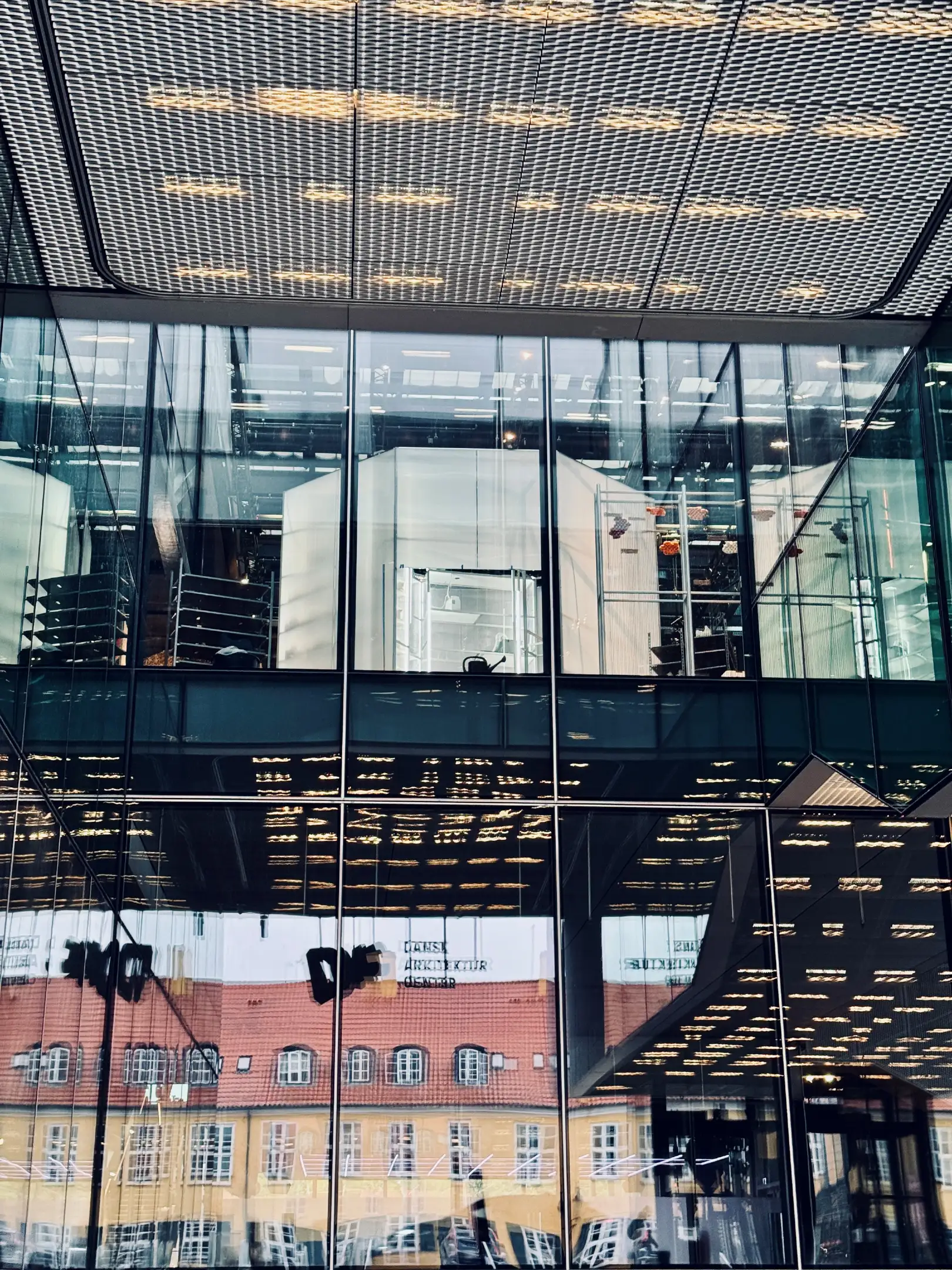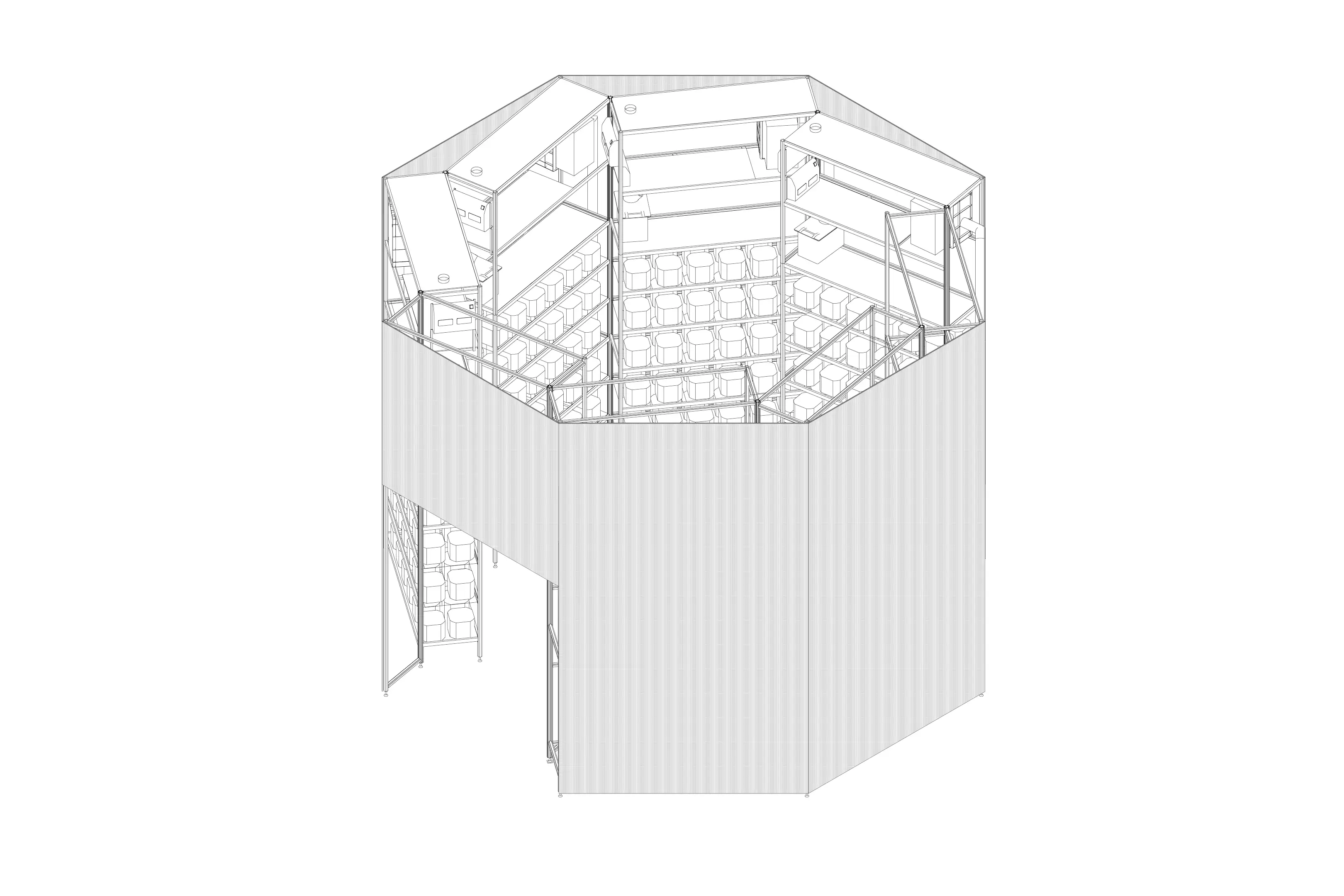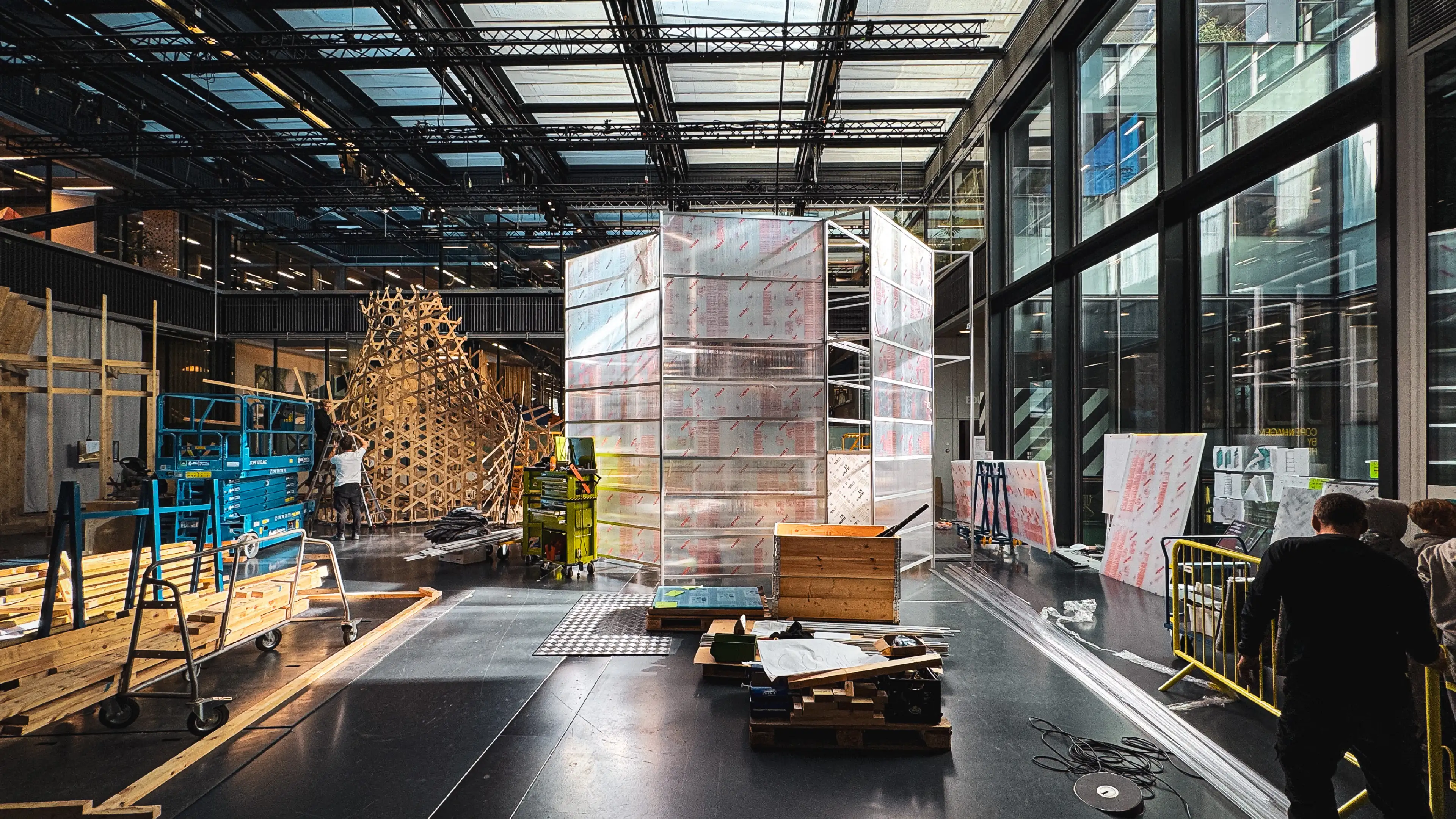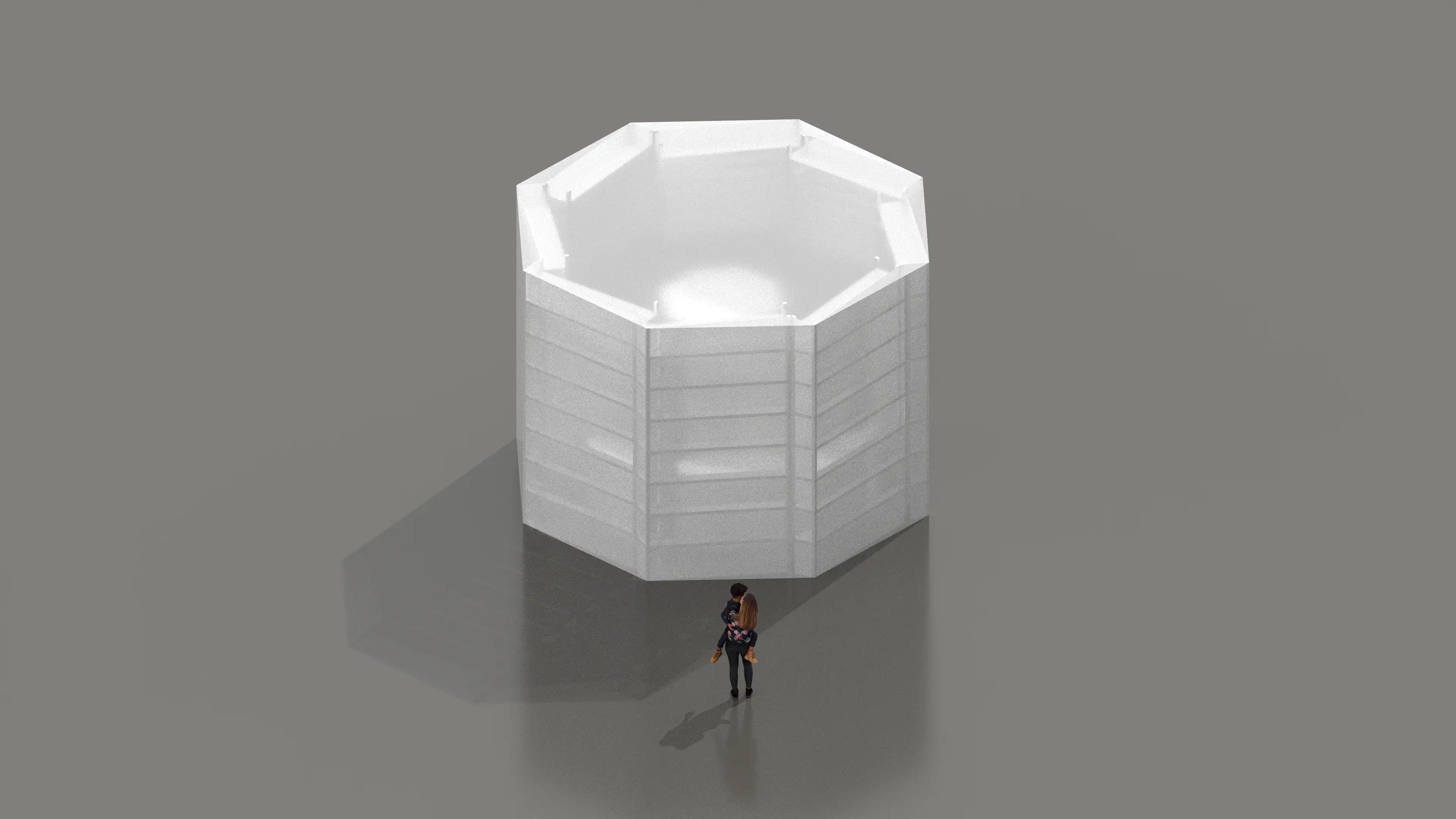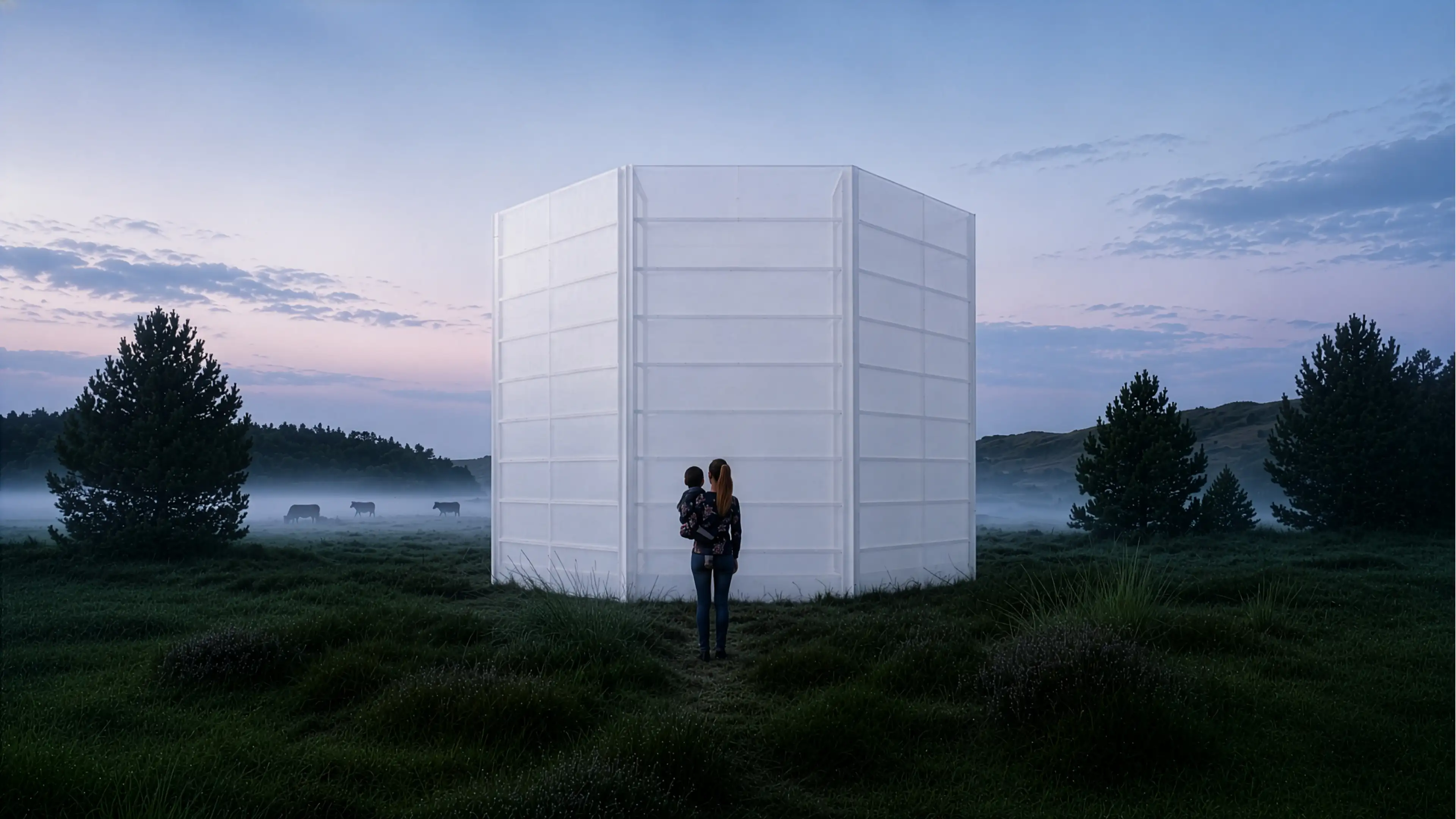
Habitat 25 is a 30 m² mushroom tower built inside the Danish Architecture Center as part of the exhibition Age of Nature. The project explores architecture as an active participant in the metabolism of the city, connecting food production, residual resources and land use in one spatial experiment.
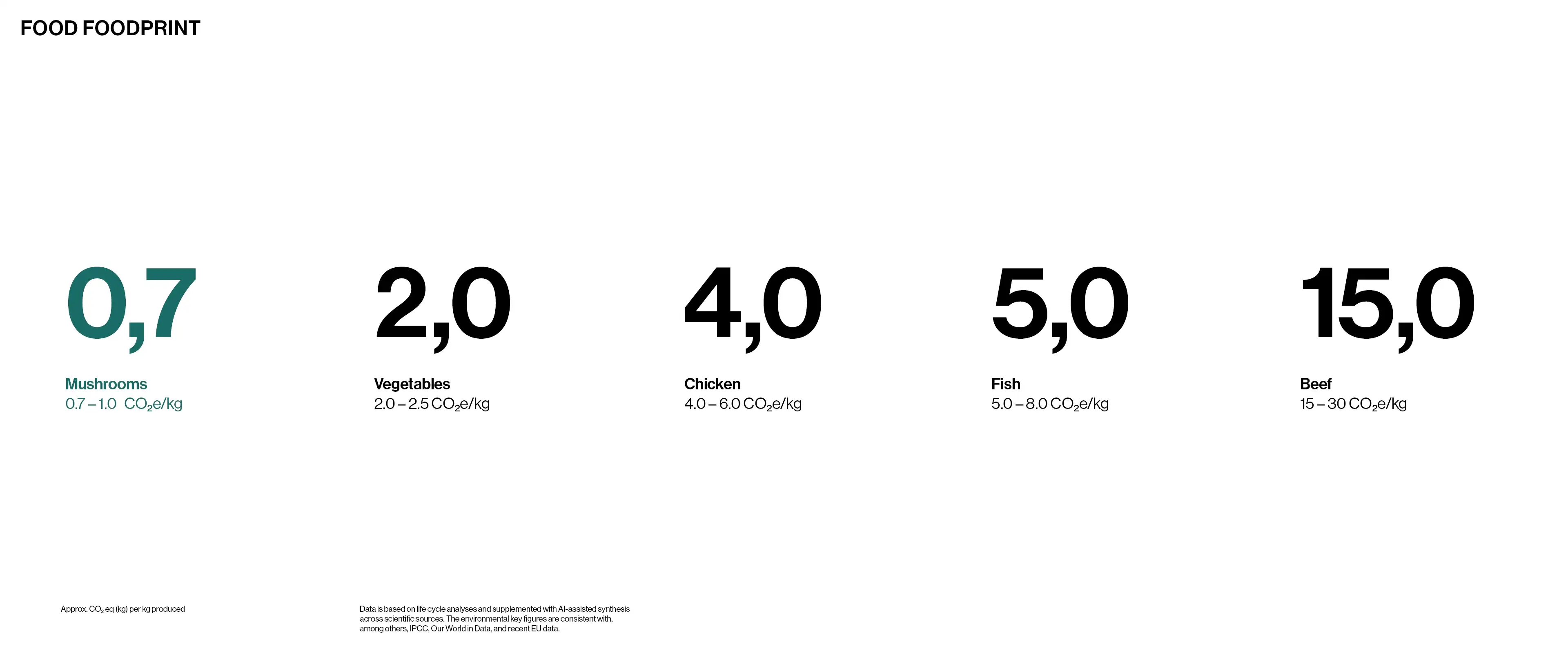
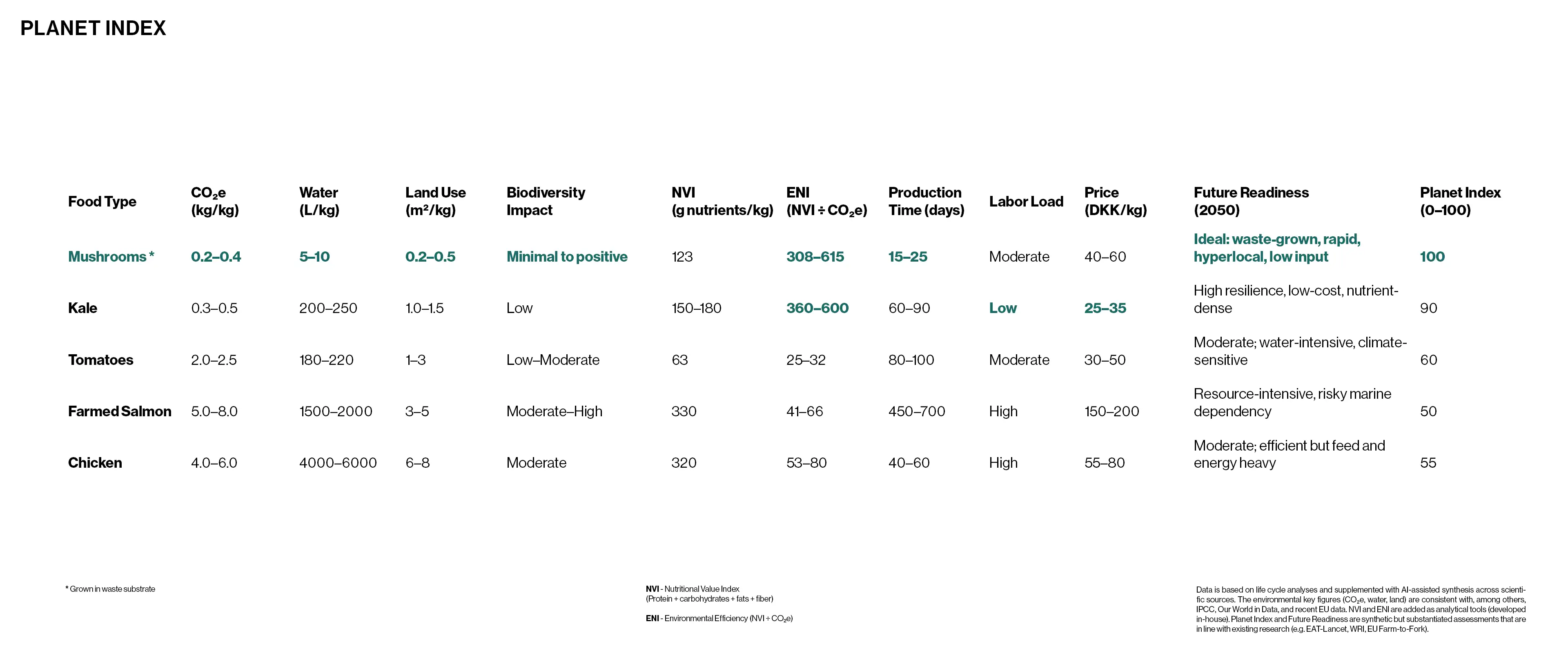
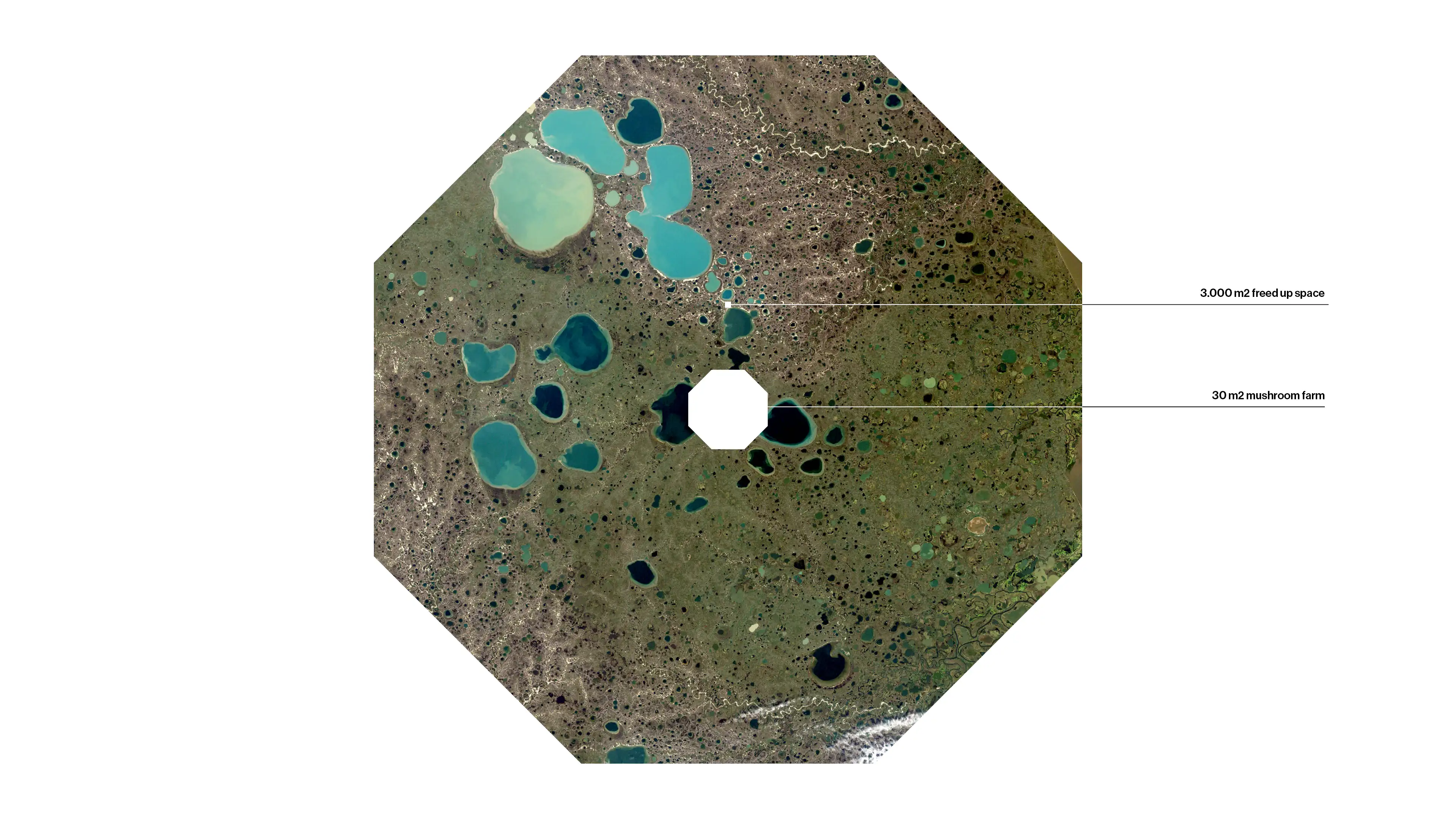
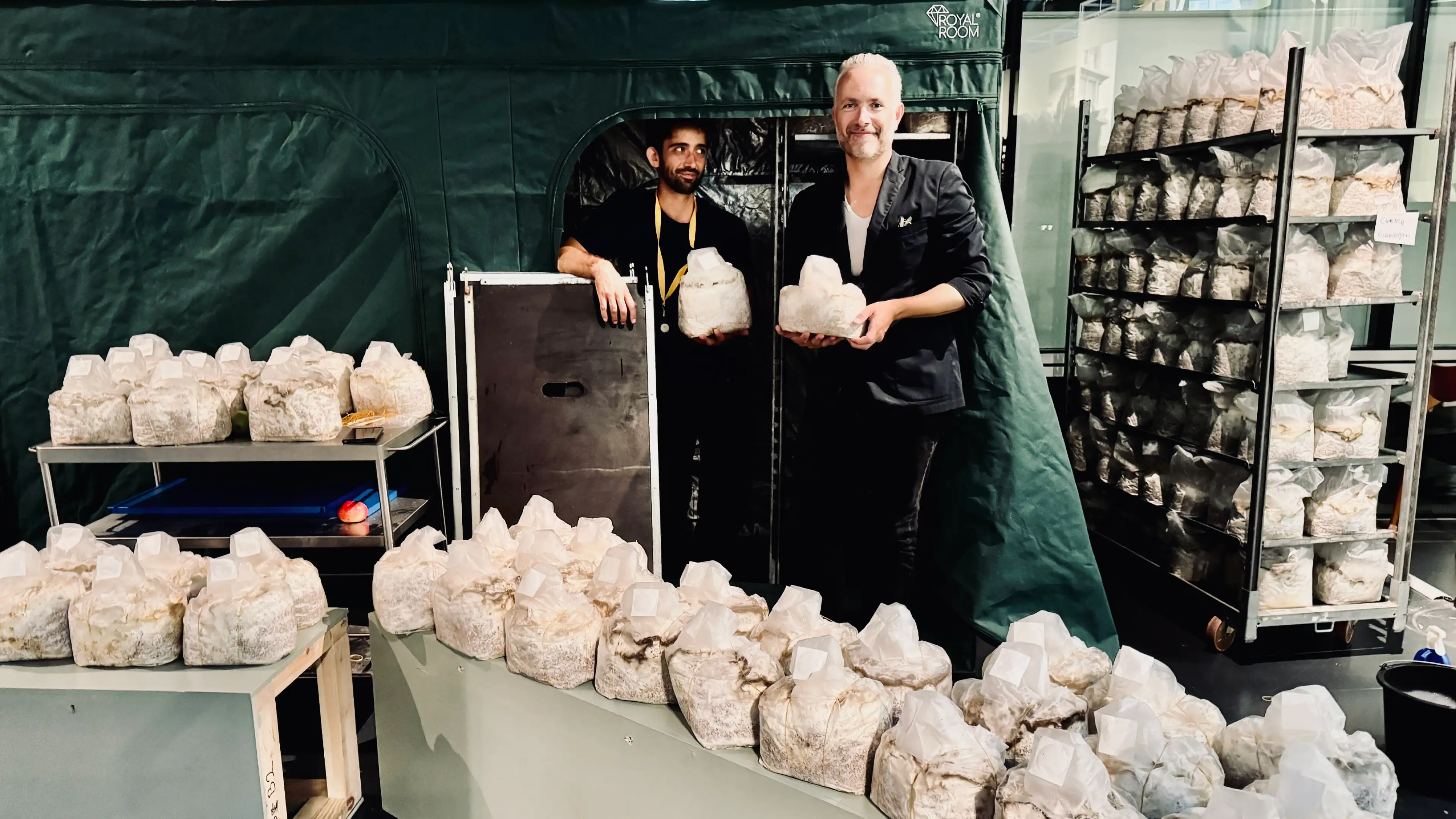
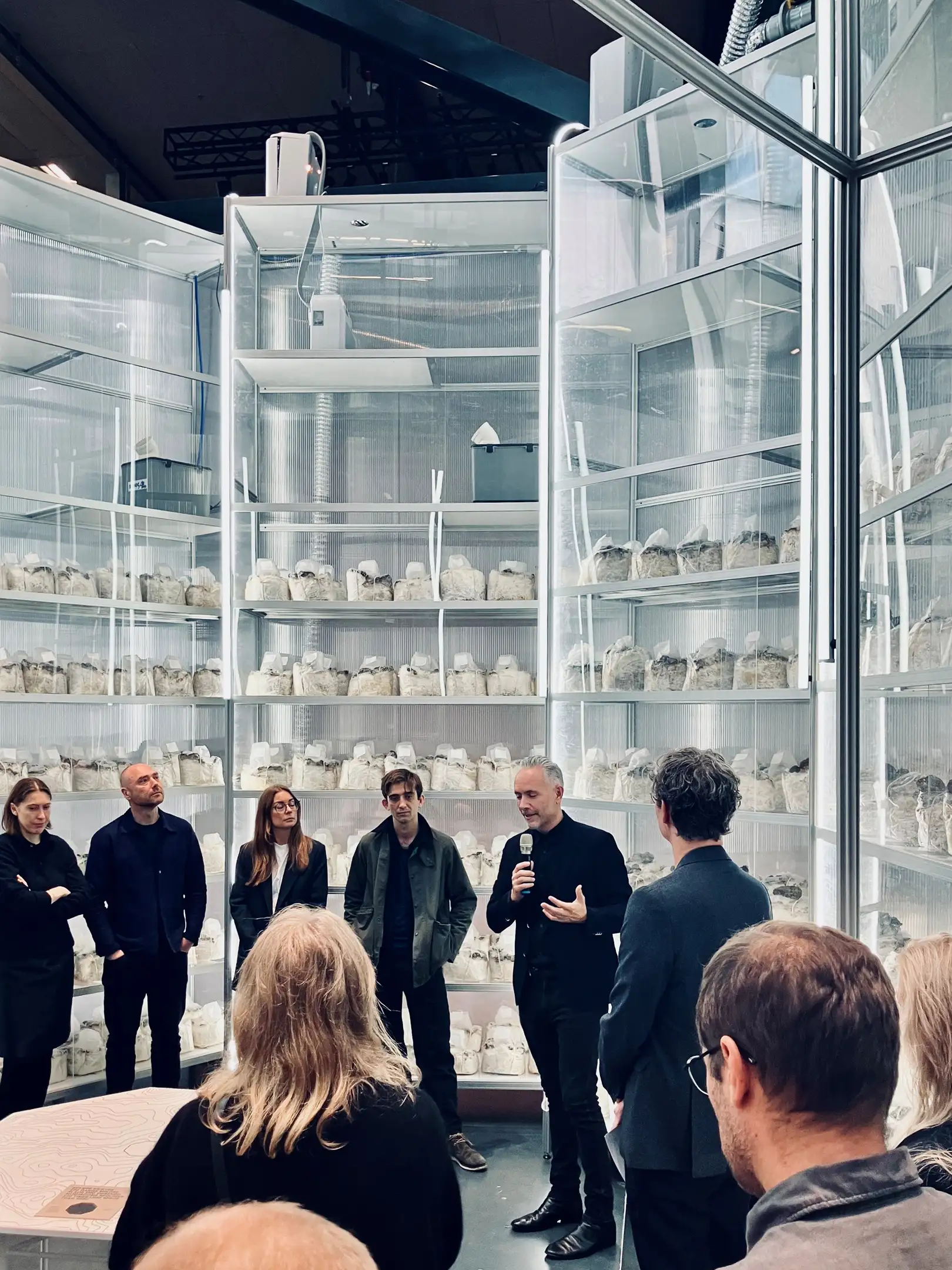
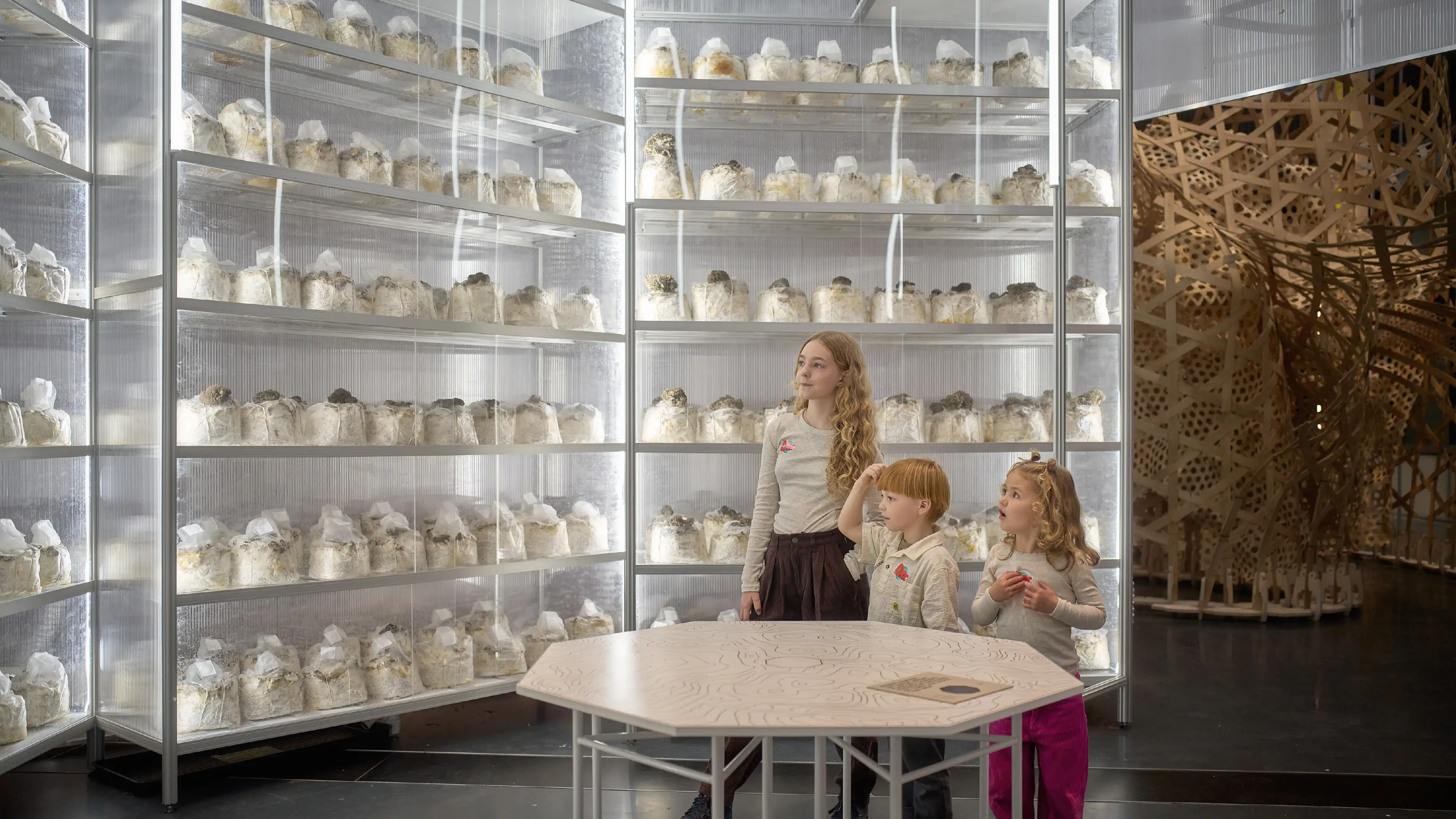
Inside the tower, maitake mushrooms are cultivated in a controlled urban microclimate using residual biomass as substrate. The compact system has a land footprint more than one hundred times lower than beef production.
The prototype points beyond itself. If cities take greater responsibility for what they consume, new forms of production could help release land for biodiversity, forests, wetlands and other living systems. Habitat 25 asks how architecture can help reorganise human systems so more space and complexity can be returned to the living world.
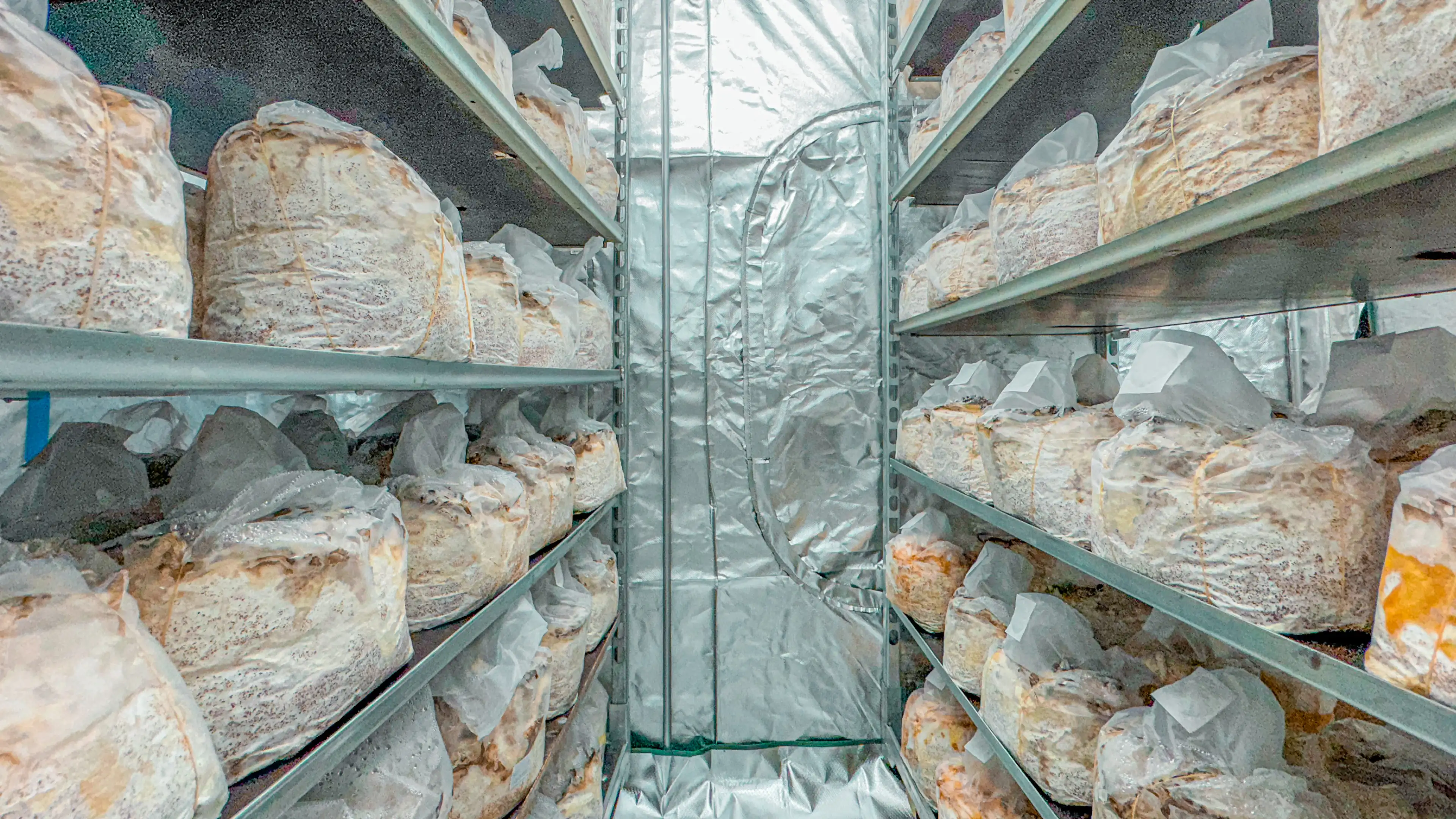
Architecture has traditionally protected humans from weather, moisture, decay and other species. Habitat 25 starts from another position: what happens when architecture becomes a participant in living cycles rather than a barrier against them?
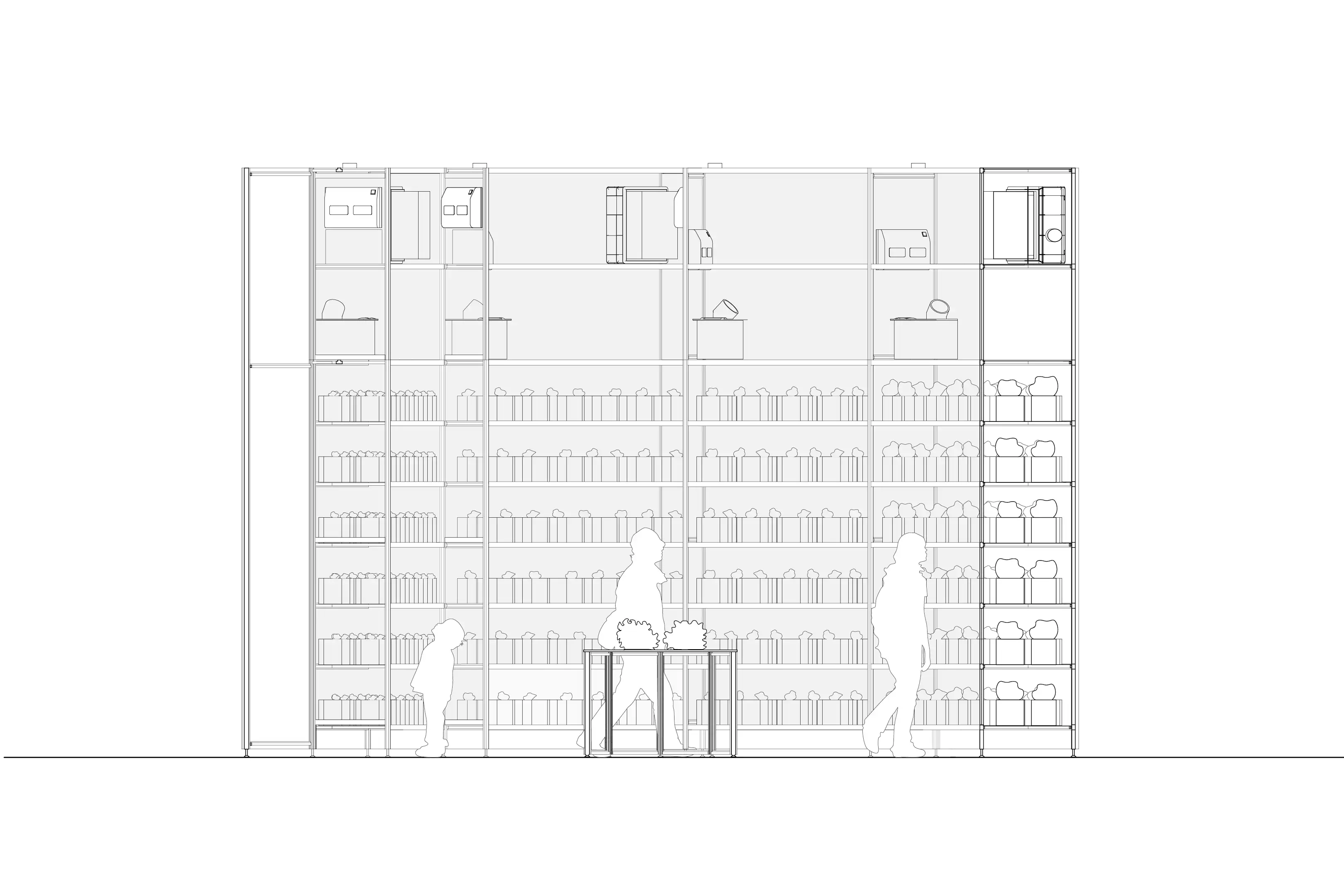
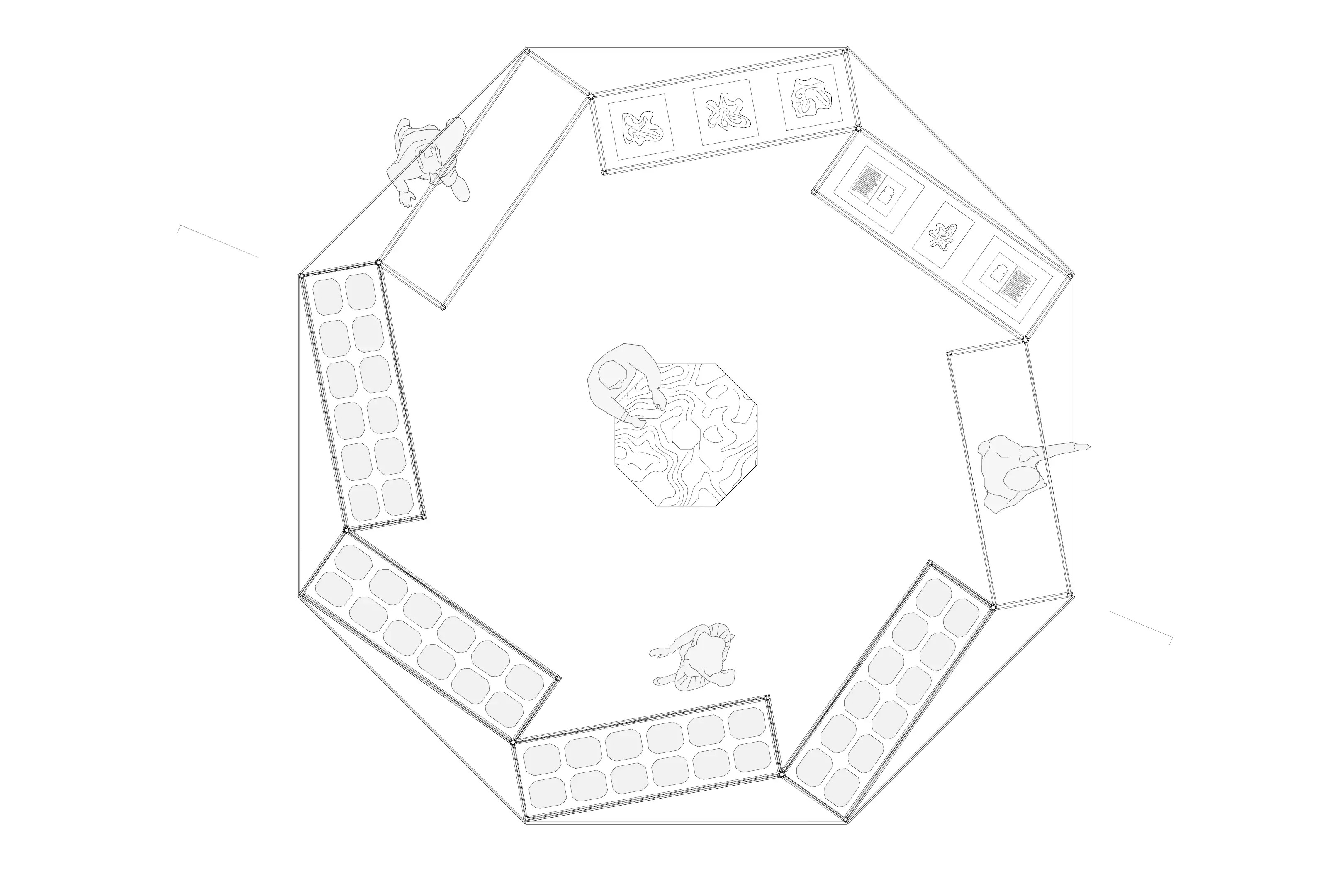
The installation is part building, part cultivation chamber and part public interface. The tower itself is a circular architecture hack, built from the aluminium exhibition system already used by DAC. The system is reconfigured for cultivation and can be dismantled after the exhibition and reused.
Within its translucent enclosure, temperature, humidity and substrate are calibrated to support fungal growth. Organic residuals enter the system and food comes out. Habitat 25 asks how architecture can redirect both existing structures and flows of matter, energy and nutrients toward regenerative outcomes.
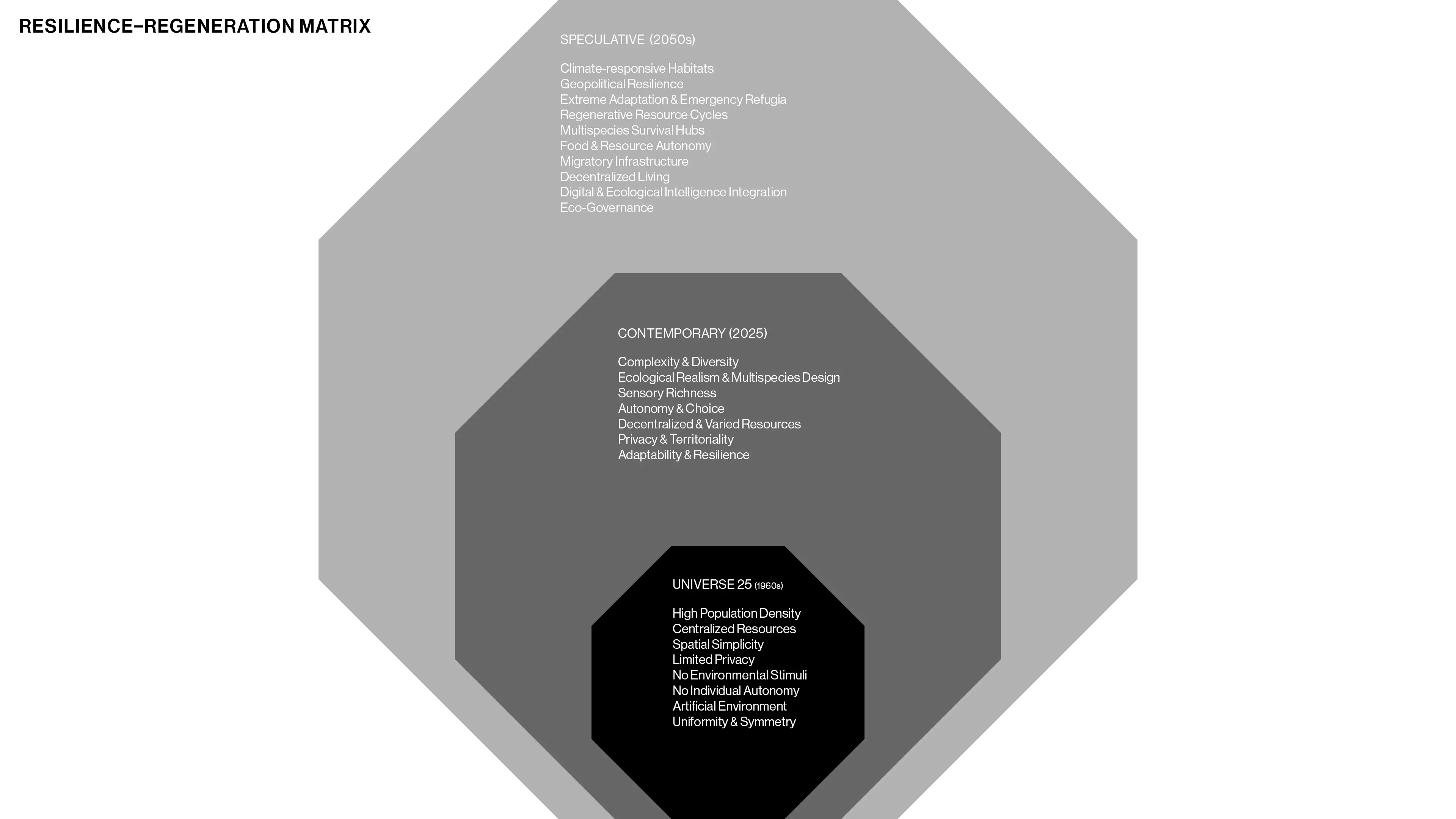
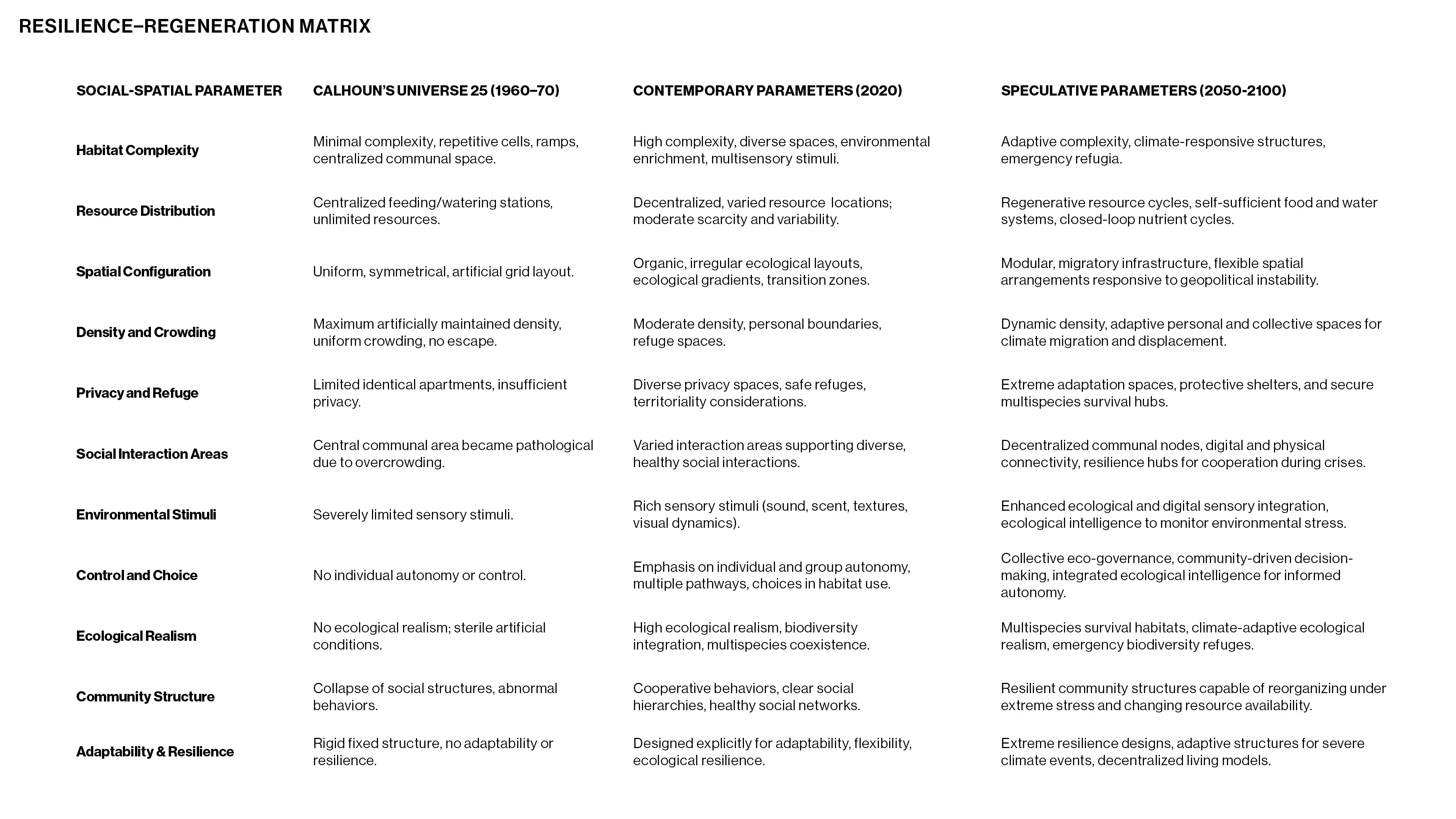
The title refers to behavioural scientist John B. Calhoun’s Universe 25 experiments, in which a population of mice living with abundant food and shelter eventually suffered severe social breakdown. The experiment became a disturbing model of systems that appear optimal, yet lack diversity, adaptability and meaningful relationships.
Habitat 25 turns that reference around. Rather than another closed and optimised environment, it proposes architecture as an open, responsive system connected to biological cycles, residual resources and changing conditions.
The project also exposes a mismatch between emerging forms of production and the systems governing them. Copenhagen’s former Bygaard mushroom farm, initiated by Lasse Antoni Carlsen, demonstrated urban food production from residual streams, yet fell outside conventional agricultural support structures.
Habitat 25 therefore operates as both prototype and proposition: what spatial, cultural and regulatory structures must change for alternatives like this to become viable at scale?
Food production is one of the largest forces shaping the planet. Agriculture, forests, wetlands, settlements, energy and biodiversity are all part of the same land-use equation.
Habitat 25 compresses that equation into a small urban prototype. Its significance is not that all food should be produced in cities, but that cities must take greater responsibility for the landscapes that sustain them.
At its centre is maitake, the dancing mushroom, a species associated with old, mature trees and vulnerable in Denmark. Cultivating it in a compact urban system creates a deliberate contrast between accelerated human production and the slow ecological time such efficiencies might help make room for.
Land is simultaneously needed for food, settlement, energy, water, biodiversity and carbon storage. Habitat 25 demonstrates a simple principle: use less land for human systems and more can be returned to ecological processes.